
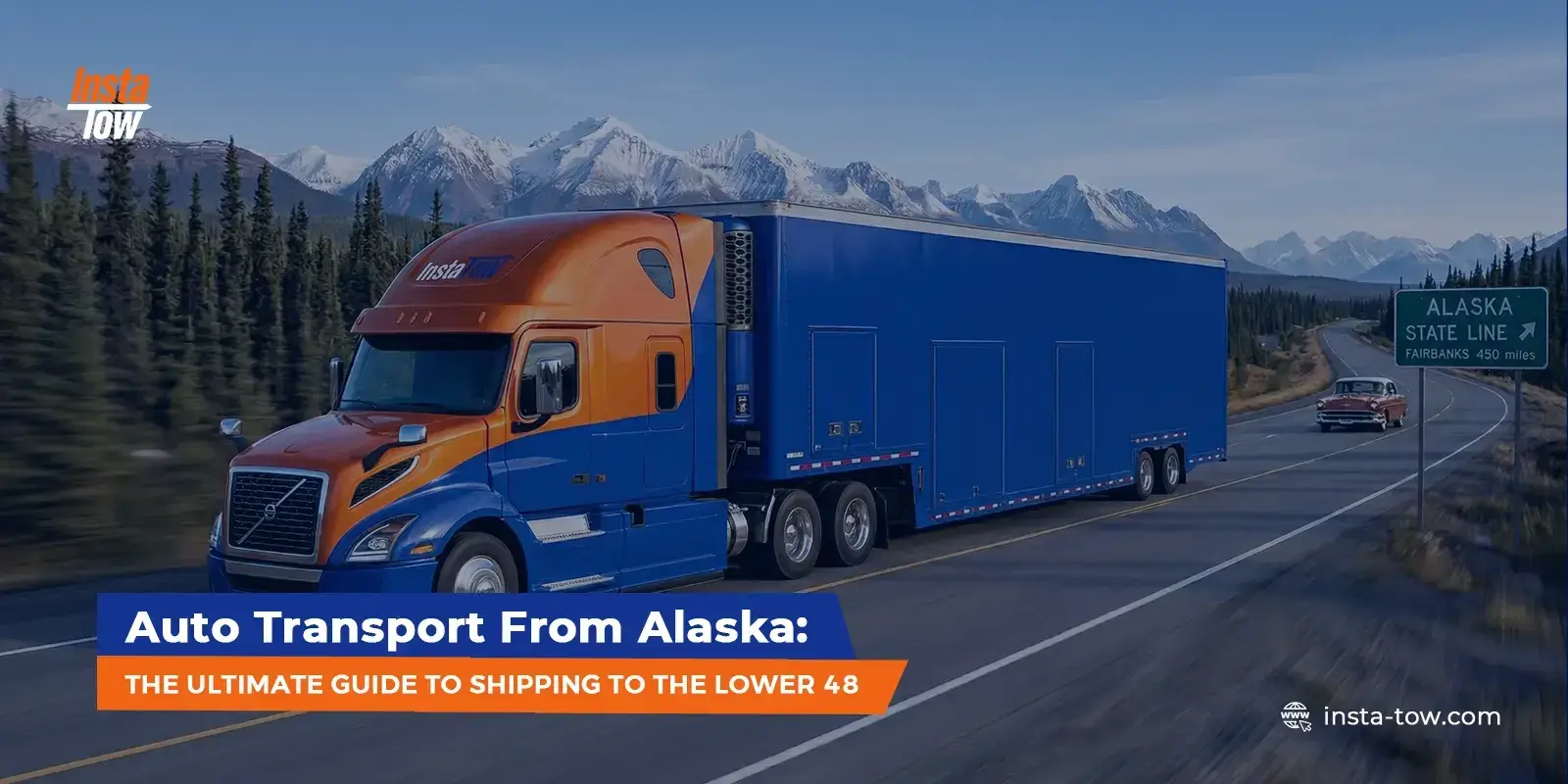
Shipping a vehicle from the Last Frontier requires a specialized approach due to the state's unique geography and climate.
To ship a car from Alaska, you primarily choose between Sea-Barge transport, where your vehicle travels via the Port of Anchorage to the Pacific Northwest, or Overland transport via the Alcan Highway.
Both methods require precise port coordination and adherence to strict winterization standards to ensure a seamless transition to the contiguous United States.
How Alaska Car Shipping Works: The InstaTow 3-Step Process
Navigating the logistics of auto transport from Alaska can feel overwhelming, but our refined methodology simplifies the movement from the northern latitudes to your destination in the Lower 48.
By centralizing communication and leveraging established maritime and ground routes, we ensure your vehicle is handled with the expertise required for such a rugged journey.
Step 1: Choosing Your Route (Sea vs. Land)
The first critical decision involves determining whether your vehicle will travel by water or by road.
Most residents and dealerships opt for Barge car shipping because it bypasses the grueling 2,000+ mile drive through the Yukon and British Columbia, which can be treacherous during shoulder seasons.
Sea Route: Typically involves dropping the vehicle at the Port of Anchorage or Fairbanks for transit to Seattle or Tacoma.
Land Route: Involves an open or enclosed carrier traversing the Alaska Highway (Alcan), ideal for those needing delivery to midwest or eastern states without the Seattle detour.
Assessment: Our team evaluates your vehicle type, current location, and final destination to recommend the most cost-effective path.
Step 2: Logistics & Port Coordination
Once the route is selected, the logistical heavy lifting begins.
Shipping from Alaska isn't as simple as a standard state-to-state move; it requires synchronized timing with barge departures and terminal availability.
Terminal Drop-off: You or our local carrier delivers the vehicle to a designated hub in Anchorage or Fairbanks.
Documentation Review: We verify Alaska vehicle customs documentation and lien-holder authorizations to prevent delays at the border or port.
Loading Protocols: Vehicles are secured using specialized equipment designed to withstand the motion of Pacific sea swells or the vibrations of gravel-laden northern highways.
Step 3: Door-to-Door Delivery in the Continental U.S.
The final leg of the journey begins once your vehicle reaches the Lower 48.
Whether it rolls off a barge in Washington or crosses the border in Montana, we transition the vehicle to a regional carrier for the final stretch.
Arrival Inspection: A secondary vehicle condition report is conducted upon arrival at the primary U.S. hub.
Final Transport: Your car is loaded onto a domestic carrier for Lower 48 transport directly to your residence or place of business.
Communication: You receive automated updates as the vehicle clears major transit milestones, ensuring you are ready for the final hand-off.
The InstaTow Process at a Glance:
Direct Consultation: Expert route mapping.
Port Management: Handling all terminal fees and paperwork.
Final Mile: Professional delivery to your doorstep in any of the 48 states.
Shipping Methods: Sea-Barge vs. Overland Towing
Choosing the right shipping method is the most significant factor in your auto transport from Alaska experience.
The geographic isolation of the state means that standard trucking is rarely the default; instead, a hybrid approach involving maritime logistics or long-haul over-the-road transport is required to bridge the gap between the Arctic and the continental United States.
Port-to-Port Sea Transport (The Most Common Method)
For the vast majority of our clients, Seattle to Anchorage car shipping (and its southbound equivalent) remains the gold standard.
This method utilizes massive ocean-going barges that are specifically designed to handle the volatile conditions of the Gulf of Alaska and the North Pacific.
Reliability: Large vessels are less susceptible to the road closures and mudslides that can plague the Alcan Highway.
Safety: Vehicles are parked and lashed down in a controlled environment, significantly reducing the risk of rock chips or road debris damage.
High Capacity: These barges can move hundreds of vehicles at once, making it the most environmentally efficient way to facilitate Lower 48 transport.
Enclosed vs. Open Carrier for the Lower 48 Leg
Once your vehicle arrives at a domestic port like Tacoma or Seattle, the journey isn't over.
You must decide how it travels the remaining miles to your driveway.
Open Carrier: The standard choice for most daily drivers. It is cost-effective and provides excellent visibility for the driver to monitor the load.
Enclosed Carrier: Highly recommended for luxury, classic, or exotic vehicles. This protects your car from weather, dust, and prying eyes during the long transit across the U.S. interior.
Frequency: Open carriers are more readily available, often resulting in slightly faster dispatch times once the barge is unloaded.
Special Considerations for Oversized Vehicles and RVs
Shipping an oversized vehicle such as a lifted truck, a Sprinter van, or a Class A motorhome requires a deeper look at RoRo vs. Container shipping.
RoRo (Roll-on/Roll-off): The vehicle is driven onto the ship and secured to the deck. This is mandatory for oversized units that cannot fit inside a standard shipping container.
Container Shipping: Offers the highest level of security for standard-sized vehicles, as the car is sealed inside a metal box for the duration of the voyage.
Clearance Issues: Always provide exact height, width, and weight measurements to avoid oversize surcharges at the terminal.
you can also read: Reliable Car Shipping in Delaware: Fast Quotes & Door-to-Door Transport
Estimated Costs: What Influences Alaska Auto Transport Rates?
When calculating the budget for auto transport from Alaska, it is important to realize that rates are not static.
Unlike a standard move between Texas and Florida, Alaska shipping involves port fees, fuel surcharges for maritime vessels, and extreme seasonal adjustments that can swing prices by hundreds of dollars.
The Port of Seattle/Tacoma Connection
Most sea-based logistics for Alaska funnel through the Pacific Northwest.
This hub-and-spoke model means that your proximity to Seattle significantly impacts your total price.
Direct Port Delivery: If you can pick up your vehicle at the Port of Tacoma, you save the cost of the domestic trucking leg.
Secondary Hubs: Transporting a car from Anchorage to a city like Miami will be significantly more expensive than Anchorage to Portland due to the thousands of additional overland miles.
Terminal Handling: Every vehicle is subject to a terminal handling charge (THC) at both the origin and destination ports.
Seasonal Fluctuations: Why Winter Shipping Costs More
While summer is the peak season for volume, winter presents the greatest logistical challenges. The demand for Winterized vehicle transport increases as Alaskans head south for the season, but the supply of available carriers often thins out.
Heating Requirements: Some terminals require specialized handling for vehicles in sub-zero temperatures.
Insurance Premiums: Carriers may face higher insurance costs during the months of heavy snow and ice on the northern routes.
Reduced Barge Frequency: While major ports operate year-round, extreme weather can occasionally delay departures, causing a backlog that drives up short-term pricing.
Remote Location Surcharges (Beyond Anchorage and Fairbanks)
If you are shipping a vehicle from a location not connected to the primary Railbelt or road system such as Juneau, Ketchikan, or Nome the costs will increase due to the need for secondary feeder barges.
Barge car shipping from Southeast Alaska often requires a transfer in a primary hub.
Fairbanks Surcharge: Since Fairbanks is roughly 360 miles north of the primary port in Anchorage, expect an additional fee for the rail or truck transport between these two cities.
Home Pickup: Opting for a Door-to-Port service in a remote town will always be priced higher than a standard Port-to-Port drop-off.
Factors to Check Before Booking Your Quote:
Vehicle operable vs. inoperable status (Inoperable vehicles cost more to load).
Current fuel price indices for maritime diesel.
Availability of Backhaul rates during the off-season.
Seasonal Challenges: Navigating the Alaska Climate
The environment of the North is unforgiving, and auto transport from Alaska is heavily dictated by the shifting seasons.
Unlike the Lower 48, where weather usually causes minor delays, Alaskan weather can fundamentally alter shipping routes, equipment requirements, and safety protocols.
Winterization Requirements for Vehicle Transport
When moving a car from a sub-zero environment to a temperate one, or vice versa, Winterized vehicle transport standards must be met to protect the mechanical integrity of your asset.
Fluids that are sufficient for a Texas summer will fail during a Fairbanks winter.
Antifreeze/Coolant Levels: Vehicles must have engine coolant rated for at least -30°F to prevent the engine block from cracking during port storage.
Battery Health: Cold cranking amps (CCA) drop significantly in Arctic temperatures; we recommend testing your battery before drop-off to ensure it can start for loading/unloading.
Tire Pressure: Drastic temperature drops cause PSI to fluctuate. We ensure tires are properly inflated to withstand the pressure changes during the transition across different climate zones.
Managing Delays: How Arctic Weather Impacts Timelines
Shipping timelines in Alaska are weather permitting.
While InstaTow utilizes the most robust maritime vessels available, Mother Nature still holds the final say.
Gale Warnings: High seas in the Gulf of Alaska can delay barge departures from the Port of Anchorage by 48-72 hours.
Pass Closures: For overland routes, heavy snowfall on the Thompson Pass or the Alcan Highway can halt trucking convoys for several days.
Terminal Frost: Extreme ice buildup at the docks can slow down the loading of RoRo vs. Container shipping units as safety checks take longer to perform.
Preparing Your Vehicle for the Journey: The Essential Checklist
A successful relocation depends on the preparation done before the vehicle ever reaches the terminal.
To ensure your auto transport from Alaska goes smoothly, following a standardized protocol is mandatory for both safety and legal compliance.
Fuel Level and Battery Maintenance Standards
For safety reasons, maritime and overland carriers have strict rules regarding what can be inside the vehicle’s tank.
The 1/4 Tank Rule: Your vehicle must have no more than one-fourth (1/4) of a tank of fuel. This reduces weight and minimizes fire hazards during transit.
Battery Security: The battery must be securely fastened in its bracket. If you have an electric vehicle (EV), the charge should ideally be between 45% and 60%.
Fluid Leaks: Any active leaks (oil, transmission fluid, or brake fluid) may result in the vehicle being rejected at the port to prevent damage to other vehicles.
Documentation Needed: Liens, Titles, and Photo IDs
The paperwork for Alaska vehicle customs documentation is more rigorous than a standard state-to-state move, especially if the route passes through Canada or involves maritime law.
Original Title or Letter of Authorization: If the vehicle is financed, you must provide a notarized letter from your lienholder authorizing the vehicle to be shipped out of state.
Proof of Insurance: Valid insurance must be maintained throughout the duration of the transport.
Photo Identification: A government-issued ID must be presented by the person dropping off or picking up the vehicle.
Clearing Customs: Shipping via the Alcan Highway vs. Water
Understanding the border requirements is crucial for a headache-free move.
Water Routes: When using Barge car shipping from Anchorage to Seattle, your vehicle stays within U.S. jurisdictional waters, meaning you avoid Canadian customs inspections.
Alcan Highway: If your vehicle is towed overland, it must transit through Canada. This requires a clean manifest and ensures no prohibited items are stored inside the car.
Personal Items: Generally, carriers prohibit personal belongings inside the car during shipment. Exceptions are sometimes made for factory-installed accessories like spare tires and jacks.
Checklist: Preparing Your Alaska Shipment
[ ] Wash exterior for a proper condition report.
[ ] Remove all toll tags and parking passes.
[ ] Disable car alarms.
[ ] Check antifreeze/coolant rating.
[ ] Ensure fuel is at or below 1/4 tank.
Why InstaTow is the Preferred Choice for Alaska Vehicle Relocation
Choosing a partner for auto transport from Alaska requires more than just a truck; it requires a deep understanding of the logistical hurdles unique to the North.
InstaTow has built a reputation for reliability by combining advanced technology with boots-on-the-ground expertise in the most remote regions of the continent.
Real-Time Satellite Tracking in Remote Zones
Traditional cellular tracking often fails when a vehicle is in the middle of the Gulf of Alaska or traversing the desolate stretches of the Yukon.
Satellite Integration: We use high-frequency satellite pings to monitor the progress of our barges and overland carriers.
Predictive Logistics: Our system analyzes weather patterns in real-time to adjust estimated arrival times before delays occur.
Transparency: Customers receive a secure portal link to view their vehicle's last known coordinate, providing peace of mind during Lower 48 transport.
Comprehensive Insurance Coverage for Sea & Land
The transition between various modes of transport from a local flatbed to a massive sea vessel introduces multiple touchpoints.
InstaTow provides a seamless insurance umbrella that covers every leg of the journey.
Marine Insurance: Specific coverage for maritime perils, which is often excluded from standard personal auto policies.
Gap Protection: We ensure no coverage lapses exist during the transition from the Port of Seattle to the final destination carrier.
Documentation: Every vehicle undergoes a rigorous digital condition report with high-resolution photos at every transfer point.
Expert Handling of Military PCS Moves to/from Alaska
We specialize in Military PCS Alaska relocations, understanding the specific requirements and strict timelines faced by service members stationed at JBER or Eielson AFB.
VPC Coordination: We work directly with Vehicle Processing Centers to ensure your POV (Privately Owned Vehicle) meets all military shipping standards.
Government Compliance: Our team is well-versed in the documentation required for reimbursement through military travel entitlements.
Priority Dispatching: We prioritize military personnel to ensure their vehicles arrive in coordination with their report-to dates.
Alaska Auto Transport FAQs
How long does it take to ship a car from Alaska to the Lower 48?
On average, the process takes 10 to 21 days.
The timeline depends heavily on the barge schedule from the Port of Anchorage and the final destination in the contiguous U.S. Transit from Seattle to Anchorage car shipping routes typically sees the ocean leg completed in 5-7 days, with additional time needed for ground dispatch.
Can I leave personal items in my car during shipment?
For safety and legal reasons, it is strictly advised that you do not leave personal items in the vehicle.
Carriers are not licensed to transport household goods, and items left inside can increase the risk of theft or damage.
Additionally, vehicles traversing the Alcan Highway must clear customs, and extra items can lead to intensive inspections and delays.
Is it cheaper to drive or ship my car from Alaska?
While driving may seem cheaper upfront, when you factor in the cost of fuel, 2,000+ miles of wear and tear, hotel stays, and food, auto transport from Alaska is often more cost-effective.
Furthermore, the risk of vehicle damage from gravel and debris on the northern highways makes professional shipping a much safer investment for your vehicle's long-term value.
Ready to Move? Contact the Alaska Shipping Experts
Navigating the complexities of auto transport from Alaska requires precision, and our team is standing by to coordinate your logistics personally.
Skip the automated forms and connect directly with a specialist who understands the North Pacific routes and the Alcan Highway.
Get in Touch Directly
Phone: [+1 (252) 630-5499] - Speak with an Alaska Logistics Coordinator.
Email: [info@insta-tow.com] - Send us your vehicle details for a custom review.
Online: Contact Us - Reach out through our secure web portal.
Expert Tip: Whether you are coordinating a Military PCS Alaska relocation or moving a seasonal vehicle to the Lower 48 transport hubs, having your VIN and preferred shipping dates ready will help our team provide the fastest assistance.