
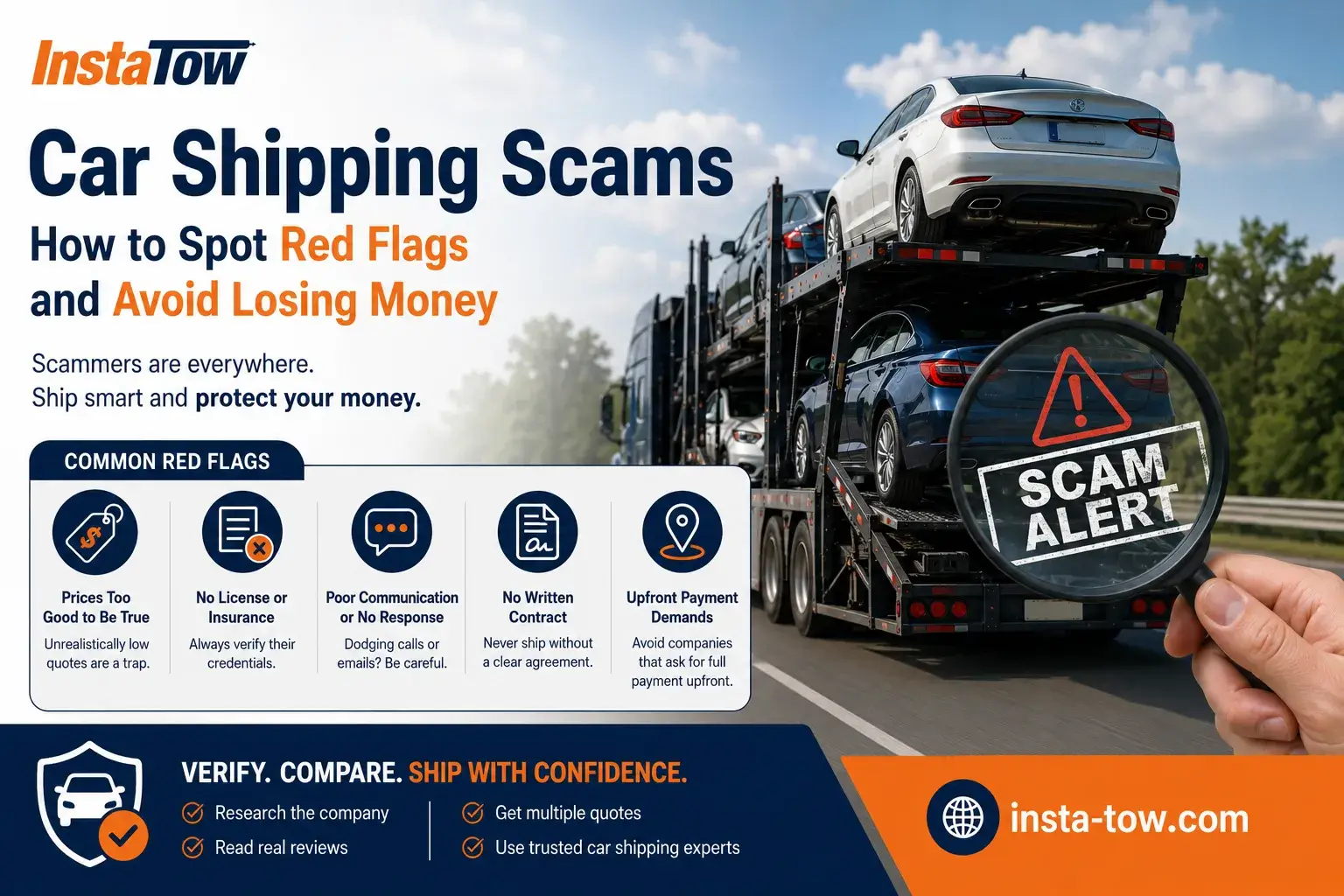
Protecting your vehicle and finances from modern car shipping scams requires examining the core details of a transport offer before handing over any money.
Many fraudulent schemes do not look like obvious digital traps; instead, they masquerade as standard logbook logistics while hiding predatory pricing hooks, unauthorized fees, and deceptive contract clauses.
The true danger often manifests subtly through an unusually low car shipping quote, vague corporate identities, unexpected billing adjustments, or aggressive time-sensitive pressure tactics designed to force a rushed deposit.
Recognizing these vulnerabilities early allows consumers to differentiate between standard operational hitches and deliberate financial exploitation.
Rather than relying on generic warnings to stay safe, this guide provides an actionable framework to scrutinize your transport estimate, verify provider credentials, and protect your hard-earned funds at every single stage of the vehicle relocation journey.
Common entry points for deceptive transport operations include:
Suspiciously reduced initial pricing models designed to hook budget-conscious clients
Concealed corporate entities or unverified legal business structures
Ambiguous legal agreements hiding unexpected surcharges
Sudden, unexplained rate hikes implemented post-booking
Coercive requests for immediate, unsecured upfront payments
How Do Car Shipping Scams Usually Work?
Uncovering how auto transport scams operate requires analyzing a structured sequence of psychological and financial triggers rather than isolated incidents.
Bad actors typically execute a multi-phase lifecycle designed to hook price-sensitive consumers, lock them into commitments, and gradually extract additional funds through manufactured emergencies.
Key milestones in the fraudulent transportation lifecycle:
Initial attraction via unrealistic pricing models
Artificial urgency implemented to bypass due diligence
Mid-process adjustments regarding equipment availability or base rates
Final extortion tactics deployed immediately prior to vehicle handover
Step 1: The unusually low quote
The initial hook of most car hauling fraud operations relies on presenting an artificially deflated car shipping quote that undercuts legitimate market rates by hundreds of dollars.
Fraudulent brokers or rogue entities lure consumers in with numbers that look too good to be true, knowing that cost-conscious vehicle owners will naturally gravitate toward the lowest financial figure without questioning its underlying viability.
Why unrealistic initial rates succeed in trapping consumers:
Direct exploitation of human desire for instant cost-efficiency
Intentional omission of mandatory equipment and dispatch fees
Concealment of whether an open carrier vs enclosed transport configuration is actually being priced
Step 2: The pressure to book
Once a consumer takes the bait, fraudsters immediately manufacture artificial urgency to bypass critical thinking and background verification.
This behavioral manipulation forces victims into hasty financial commitments before they have time to evaluate customer reviews, review contractual obligations, or ask vital operational questions.
Common psychological pressure phrases used by bad actors:
Book right now before this final truck fills up.
This specialized discount expires at the end of the day.
We have a dedicated driver ready on your exact route right this second.
Step 3: The price or service changes
After the customer commits and submits an initial auto transport deposit, structural modifications to the transport agreement frequently surface without warning.
Victims suddenly encounter unexpected rate hikes, phantom equipment unavailability, or rescheduled pickup windows that severely disrupt their entire relocation timeline.
Typical post-commitment operational disruptions include:
Unilateral rate increases citing sudden driver shortages across the lane
Unannounced shifts in pickup or delivery dates without prior authorization
Sudden claims that the assigned carrier cannot accommodate the specified vehicle dimensions
Step 4: The customer is pressured to pay more
In the final phase of the cycle, the consumer transitions from a proactive client seeking value into a stressed hostage compelled to pay extra charges to prevent vehicle abandonment.
Because their property is essentially held as leverage, victims feel trapped into coughing up unapproved cash balances just to secure final delivery.
How final-stage financial extortion manifests in the field:
Demanding cash-only balances upon delivery that exceed the signed contract amount
Threatening to tow the vehicle to an unauthorized storage lot if extra fees remain unpaid
Refusing to disclose the direct driver's contact information until additional money clears
Is It a Scam or Just a Normal Car Shipping Problem?
Differentiating between true car shipping scams and standard logistical hiccups prevents unnecessary panic by evaluating whether an unexpected situation represents malicious intent or typical transport friction.
Not every unexpected delay or pricing adjustment signals illegal activity; many industry variables arise from routine carrier scheduling conflicts or seasonal capacity shifts.
Learning to separate routine operational friction from malicious red flags empowers consumers to handle negotiations with confidence rather than fear.
Core distinctions every vehicle owner should recognize:
Standard logistical delays caused by weather or unexpected mechanical breakdowns
Operational adjustments governed by formal, transparent contract provisions
True malicious deception involving unverified identities and financial extortion
The 5-Point Car Shipping Scam Check Before You Book
Executing a rigorous 5-point pre-booking examination eliminates blind spots by auditing corporate legitimacy, service structures, comparative pricing, price variance clauses, and payment recipients.
This structured verification workflow protects your vehicle and budget long before any financial commitments are locked in.
1. Verify who the company actually is
Confirming actual corporate legitimacy requires looking past flashy website landing pages to evaluate legal business registrations, active contact phone numbers, and physical corporate addresses.
Unscrupulous entities frequently operate under multiple DBA (Doing Business As) names to obscure poor track records, making foundational identity verification non-negotiable.
Key identity verification steps:
Check state business registries and official corporate filings
Verify that customer support telephone numbers connect to live agents
Confirm the precise legal entity named on official paperwork
2. Determine whether you are dealing with a Broker or a Carrier
Distinguishing whether you are hiring a vehicle shipping broker or an actual physical carrier clarifies exactly who is responsible for transporting your vehicle.
Being a broker is an entirely standard business model in the logistics industry, but problems arise when companies obscure their true operational status.
Core distinctions in operational structure:
Brokers coordinate logistics, match cargo with carriers, and manage paperwork
Carriers own the trucks and execute the physical transport of your vehicle
Transparency regarding who handles your car prevents finger-pointing during disputes
3. Compare the quote with multiple offers
Evaluating multiple competitive estimates side-by-side reveals market anomalies and prevents you from falling for artificially depressed pricing traps.
True comparison requires looking far beyond a single bottom-line number to analyze equipment types, seasonal variables, and service inclusions.
Factors to analyze during competitive evaluation:
Base shipping rates versus total anticipated cost
Equipment choice specifications such as open carrier vs enclosed transport
Flexibility of pickup windows and cancellation policies
4. Ask what could make the price change
Uncovering potential post-booking pricing adjustments before signing prevents surprise fees from destabilizing your transport budget.
Instead of merely asking for an estimate, proactive questioning regarding contract modifiers protects you from unexpected spikes.
Critical questions to ask regarding rate modifications:
Under what exact operational conditions can the initial rate be modified?
Who must authorize any subsequent rate adjustments before dispatch?
Can the reservation be canceled penalty-free if rates change?
5. Check the payment recipient
Auditing the intended payment recipient guarantees your funds are routed directly to the verified corporate entity rather than a personal account or untraceable service.
Discrepancies between billing names, contract signatories, and invoice senders serve as immediate warning signs.
Essential payment safety checks:
Match the invoice issuer's name with the registered corporate business name
Avoid transferring funds to unverified peer-to-peer digital payment handles
Ensure all payment terms match the written agreement precisely
How to Tell If a Car Shipping Quote Is a Scam
Spotting car shipping scams hidden within initial pricing requires evaluating the context behind the numbers rather than merely comparing the bottom line.
A surprisingly low estimate is not inherently fraudulent, but it demands strict scrutiny to uncover missing service details, hidden fees, or unrealistic timelines that bad actors use to lure unsuspecting customers.
By shifting your focus from the final digit to the actual terms of service, you can effectively dismantle deceptive pricing strategies before they impact your wallet.
Key indicators that a quote requires deeper investigation:
The estimate undercuts the market average by an unsustainable margin.
Essential timeline guarantees and service types are entirely omitted.
The provider refuses to put the rate and conditions in a formal auto transport contract.
Why the cheapest quote can be risky
Accepting the absolute lowest offer often introduces severe logistical vulnerabilities, as bargain-basement prices usually omit essential operational costs to appear attractive.
When brokers price a route too far below the industry standard, legitimate carriers will simply ignore the job on the dispatch boards, inevitably resulting in a severe vehicle delivery delay or a last-minute demand for more money to actually move the car.
Common reasons behind dangerously low initial quotes:
Bait-and-switch tactics hiding different service tiers or equipment types.
Unrealistic pickup dates that no actual truck driver will accept.
Lack of available carriers operating on that specific regional route.
Failure to account for the specific dimensions and weight of your vehicle.
Ignoring real-time seasonal market fluctuations and fuel surcharges.
The real question is not: Is this quote cheap?
Focusing solely on affordability creates a dangerous blind spot when evaluating transport logistics.
Instead of asking if a price is cheap, the essential question to ask is: Why is this quote different, and what exactly is included in it? Framing your analysis this way forces providers to justify their pricing structure, exposing operators who rely on concealed fees or inferior service standards to artificially depress their initial estimates.
Use a quote comparison worksheet
Transitioning from passive reading to active evaluation requires an organized system to track competing offers accurately.
Using a structured matrix prevents crucial details from slipping through the cracks and highlights inconsistencies that often signal underlying car shipping scams.
10 Questions to Ask a Car Shipping Company Before Paying
Interrogating a provider with highly specific operational questions transforms you from a passive consumer into an active investigator, making it significantly harder for car shipping scams to succeed.
By demanding clear, documented answers about pricing modifiers, refund policies, and liability, you force deceptive operators to reveal their inconsistencies before any financial transaction occurs.
10 critical questions to test transport companies:
Are you a broker or a carrier?
What exactly is included in this quote?
Can the price change after booking?
Under what circumstances can the price change?
What is the deposit for?
Is the deposit refundable?
What happens if a carrier cancels?
What is the pickup window?
What additional fees could I pay?
Who is responsible for documenting vehicle damage?
Asking these targeted questions is crucial because it shifts the dynamic of the transaction; you stop simply receiving empty promises and begin actively testing the company's operational transparency.
Legitimate organizations, like the professionals at Instatow, will answer these inquiries instantly and confidently, whereas fraudulent operations will rely on vague deflections, aggressive pushback, or a flat refusal to put their answers in writing.
What Should Be in a Car Shipping Contract?
A binding auto transport contract must explicitly detail total pricing, payment breakdowns, pickup windows, cancellation policies, and liability terms before you sign.
Securing a comprehensive agreement shields you from the most common car shipping scams by transforming verbal promises into legally binding obligations that protect your vehicle and financial investment.
Relying on verbal assurances leaves you vulnerable to hidden fees and operational disputes that are impossible to resolve without a written paper trail.
Core structural safeguards required in a transport agreement:
Transparent pricing matrices with zero hidden fees
Explicit pickup and delivery date parameters
Clear, unambiguous cancellation and refund guidelines
Defined damage documentation and liability protocols
Price and payment terms
Price and payment sections must itemize the total cost, any upfront fees, remaining balances, and acceptable payment methods.
Transparent agreements explicitly state how much is due upon pickup versus delivery, ensuring you never face unexpected financial demands.
Essential financial items that must appear in writing:
Complete breakdown of base hauling fees versus total service costs
Specific terms governing the exact amount and purpose of the auto transport deposit
Accepted forms of final payment, such as certified checks or postal money orders
Pickup and delivery terms
Pickup and delivery clauses must establish clear multi-day date windows rather than exact arrival times, while defining protocols for schedule adjustments.
Knowing what happens if transit timelines slip prevents unexpected storage fees or logistical chaos upon arrival.
Key logistical parameters to look for:
Agreed-upon multi-day pickup window parameters
Expected transit timeframes mapped to regional distance
Proactive notification requirements if carrier schedules shift unexpectedly
Cancellation and refund terms
Cancellation clauses must explicitly state under what conditions a customer can walk away and whether financial deposits are refundable.
A legitimate agreement protects your right to cancel penalty-free if a carrier fails to dispatch within the specified window.
Critical provisions governing service cancellations:
Clear deadlines for penalty-free reservation cancellations
Explicit conditions governing the return or forfeiture of upfront fees
Defined protocols if the provider fails to assign an active carrier
Additional charges
Additional charge sections must outline every potential surcharge that could modify the baseline quote before service begins.
Explicitly listing possible fees prevents unexpected price gouging or extortion upon delivery.
Common variable surcharges that must be pre-disclosed:
Oversized vehicle or modified suspension surcharges
Inoperable vehicle winching or special equipment fees
Remote location or difficult residential street access fees
Damage inspection responsibilities
Damage inspection clauses must assign clear accountability for documenting the condition of your vehicle at pickup and delivery using the Bill of Lading.
Establishing this protocol is your primary safeguard against unresolved transit damage disputes.
Mandatory inspection steps embedded in the contract:
Mandatory joint visual inspection conducted before loading the vehicle
Precise written documentation of any existing scratches, dents, or pre-existing flaws
Step-by-step reporting guidelines if transit damage occurs during transport
Related topics: How Much Does It Cost to Transport a Car in 2026? (Complete U.S. Pricing Guide)
How to Check Whether a Car Shipping Company Is Legitimate
Checking a company's legitimacy requires verifying its legal business identity, examining comprehensive customer review patterns, and confirming active operational credentials.
Spotting rogue entities before they execute car shipping scams requires verifying foundational business credentials rather than trusting flashy marketing claims or high aggregate review scores.
Multi-step verification framework for transport providers:
Cross-referencing legal corporate identities with state databases
Auditing customer feedback for recurring operational warning signs
Verifying the recency and authenticity of published reviews
Verify the company's identity
Verifying corporate identity requires cross-referencing legal business names, physical addresses, and active licensing data across official state and federal databases.
Ensuring consistency across all communication channels shields you from fly-by-night operations that vanish once a payment clears.
Essential identity checks to perform before booking:
Cross-check state incorporation filings and official corporate registries
Verify active motor carrier or broker license numbers through official transport databases
Ensure telephone numbers, corporate emails, and physical addresses match across all channels
Look beyond the average review score
Evaluating review patterns is far more effective than trusting a high average rating, as fraudulent companies often mask poor performance with manufactured praise.
Analyzing the substance of customer feedback reveals recurring issues regarding pricing changes, missing deposits, and communication breakdowns.
Critical review analysis strategies:
Scan for recurring complaints regarding unexpected fee hikes upon delivery
Investigate how the company responds to negative feedback and dispute resolutions
Identify patterns of communication breakdowns or holding vehicles hostage for cash
Check how recently customers have reviewed the company
Reviewing the recency of customer feedback ensures you are evaluating an active, stable business rather than a dormant profile revived for fraudulent activity.
A sudden gap in historical reviews followed by an unnatural spike in positive ratings warrants severe caution.
Indicators of healthy versus manipulated review timelines:
Look for consistent review activity spread evenly across recent months
Treat corporate profiles with old reviews and sudden recent spikes with suspicion
Confirm active, ongoing engagement on independent consumer protection platforms
Car Shipping Scam Red Flags: What Should Make You Stop?
Recognizing the primary red flags of car shipping scams requires watching for a dangerous accumulation of warning signs, such as aggressive sales pressure, mismatched paperwork, and unverified payment requests.
While a single operational hiccup does not automatically prove malicious intent, encountering multiple warning signals simultaneously indicates a high-risk situation that demands an immediate halt to the transaction.
Core red flags that warrant pausing your transport booking:
Pricing that deviates wildly below standard market averages without a logical explanation
Aggressive, time-sensitive pressure tactics designed to force a rushed commitment
Refusal or inability of the provider to furnish a detailed, written auto transport contract
Obscure corporate identities where the phone number, legal name, and website mismatch
Demanding payment transfers to unverified peer-to-peer accounts or individuals
Unilateral, sudden price changes implemented after an initial deposit is paid
Evasive answers regarding whether the entity operates as a vehicle shipping broker or carrier
Not every individual warning sign serves as definitive proof of car hauling fraud, but clustering these behaviors together exposes predatory actors who rely on consumer confusion to extract unauthorized funds.
The Car Shipping Scam Risk Check
Evaluating overall exposure requires utilizing a practical risk assessment framework that categorizes warning signs into clear operational tiers instead of relying on rigid, official formulas.
Sorting your transport offer into low-risk, medium-risk, or high-risk categories allows you to make informed decisions before exposing your funds to potential car shipping scams.
Low-Risk Profile (Proceed with Confidence):
Company identity, licensing, and physical address are fully transparent and verifiable.
Pricing structures are clearly detailed with zero hidden fees or unverified surcharges.
Every agreement, including cancellation terms, is provided in writing.
Customer support representatives answer operational questions directly and professionally.
Medium-Risk Profile (Requires Extra Verification):
Pricing deviates significantly from market averages without a clear logistical explanation.
Payment terms or deposit structures appear ambiguous or heavily favor the provider.
The operational distinction between a broker and a carrier remains unclear.
Critical service details are communicated solely through verbal conversations rather than writing.
High-Risk Profile (Immediate Dealbreaker):
Extreme, aggressive pressure is applied to force immediate, unsecured payment.
The provider outright refuses to supply foundational corporate or contractual documents.
Pricing shifts drastically post-booking without a valid, documented operational reason.
Payment recipient names mismatch official corporate records completely.
You can also read: Secure Auto Shipping: Complete Guide to Safe Vehicle Transport
What to Do If You Think You Have Been Scammed by a Car Shipping Company
Mitigating financial damage when falling victim to suspected car shipping scams requires immediate, methodical action rather than reactive panic.
If you suspect fraudulent activity, your primary objective is to freeze additional capital outflow, preserve comprehensive documentation, and file official complaints through the appropriate regulatory channels.
Swift, structured intervention prevents rogue operators from extracting further funds and establishes a verifiable record for financial institutions or consumer protection agencies.
Core recovery priorities upon suspecting deceptive transport practices:
Halting all unsecured financial transactions immediately
Compiling a comprehensive evidence repository of contracts and messages
Documenting a precise chronological timeline of events
Evaluating payment card protection options with your bank
Stop sending additional money until you understand the charge
Halt all further financial transactions immediately upon encountering unexplained charges, unexpected surcharges, or aggressive delivery demands.
Handing over more cash under duress rarely solves the underlying dispute and usually empowers bad actors to demand further unverified payments before releasing your vehicle.
Critical rules when managing unexpected financial demands:
Refuse cash-only payment demands made on the spot without itemized written proof
Demand formal written clarification for any fee that deviates from your original agreement
Consult your primary contract terms before authorizing any secondary disbursements
Save every piece of evidence
Preserving every digital and physical document related to your transport arrangement is essential for building a solid investigative file.
Capturing clear records of all interactions establishes an objective paper trail that substantiates your claims during dispute resolution.
Essential documentation to preserve immediately:
Signed copies of your service agreements and initial estimates
Complete text message logs, emails, and call history records
Invoices, payment receipts, and bank transaction screenshots
Photographic evidence of vehicle condition at pickup or delivery
Build a timeline of what happened
Outlining a chronological sequence of events details every interaction, price modification, and communication log to clarify the dispute.
Building this structural timeline helps you present a coherent case to financial institutions or regulatory bodies.
Key milestones to include in your dispute timeline:
Date and time of the initial price quote generation
Date of formal booking and deposit submission
Original agreed-upon pricing and pickup window parameters
Date, time, and context of any unexpected price changes or demands
Review your payment options
Examine your original payment method details immediately to determine your eligibility for chargebacks or financial institution intervention.
Credit cards generally offer robust consumer protection frameworks compared to cash or direct peer-to-peer transfers.
Financial recovery steps to take with your institution:
Contact your credit card issuer to report potential fraudulent billing
Inquire about initiating a formal chargeback for unauthorized transaction amounts
Gather transaction IDs to support your financial dispute claim
Use the appropriate official complaint channels
File formal grievances with relevant federal and consumer protection agencies, such as the Federal Motor Carrier Safety Administration (FMCSA), while recognizing that formal complaints support broader enforcement rather than guaranteed refunds.
Reporting bad actors helps protect future consumers from similar predatory logistics operations.
Recommended agencies for reporting transport fraud:
The Federal Motor Carrier Safety Administration (FMCSA) complaint portal
The Better Business Bureau (BBB) for public corporate tracking
State Attorney General consumer protection divisions
Final Car Shipping Scam Checklist
Before you pay:
I know the company's legal and operating identity.
I know whether I am dealing with a Broker or Carrier.
I compared the quote with other offers.
I understand what the quote includes.
I know when the price can change.
I understand the Deposit terms.
I reviewed cancellation and refund terms.
I know who will receive my payment.
I have the important terms in writing.
I am not being pressured into paying immediately.
By running your transport decisions through this final verification framework, you can completely safeguard your vehicle relocation project against predatory car shipping scams and ensure a seamless, secure delivery experience from start to finish.
Car Shipping Scams FAQ
Navigating the complexities of vehicle logistics becomes significantly easier when you have clear, direct answers to common questions about deceptive operations and industry safety standards.
Understanding these core answers equips you to evaluate providers confidently and avoid common financial pitfalls.
How do I know if a car shipping company is legitimate?
A legitimate transport provider maintains verifiable corporate registration, active motor carrier or broker licensing, and consistent contact information across all official channels.
Cross-referencing business details with state databases and reviewing operational transparency confirms whether an entity operates above board.
Is a low car shipping quote always a scam?
An unusually low estimate is not automatically fraudulent, but it serves as a major warning sign that requires thorough investigation.
Extremely cheap estimates often omit mandatory service fees or use bait-and-switch pricing to hook customers before introducing hidden surcharges.
Are car shipping brokers scams?
Working with a broker is a standard, legal business model in the logistics industry used to match cargo with available transport carriers.
A broker becomes problematic only when they obscure their operational role, hide carrier identities, or fail to honor written contract terms.
Why did my car shipping price increase?
Price increases typically occur due to sudden regional driver shortages, seasonal market fluctuations, or changes to your vehicle's specifications after booking.
Legitimate rate adjustments must always be justified in writing and aligned with pre-agreed contract clauses.
Should I pay a deposit to ship my car?
Paying a modest upfront deposit to a broker is common practice to secure dispatch services, provided the terms are explicitly stated in writing.
Always verify whether the deposit is refundable and confirm exactly how it applies toward your total shipping balance.
What should I do if a car shipping company asks for more money?
Stop all additional payments immediately and request a formal, written explanation detailing the exact justification for the new charges.
Compare the demand against your signed contract terms before authorizing any further financial transactions.
How can I check a car shipping company's reviews?
Look beyond high aggregate review scores by analyzing the substance and recency of customer feedback on independent platforms.
Pay close attention to recurring complaints regarding unexpected fee hikes, communication breakdowns, and unreturned deposits.
What information should be in a car shipping contract?
A comprehensive transport agreement must include total pricing breakdowns, clear payment terms, multi-day pickup windows, cancellation policies, and liability protocols.
Securing these terms in writing protects you from arbitrary price shifts and unresolved transit disputes.