
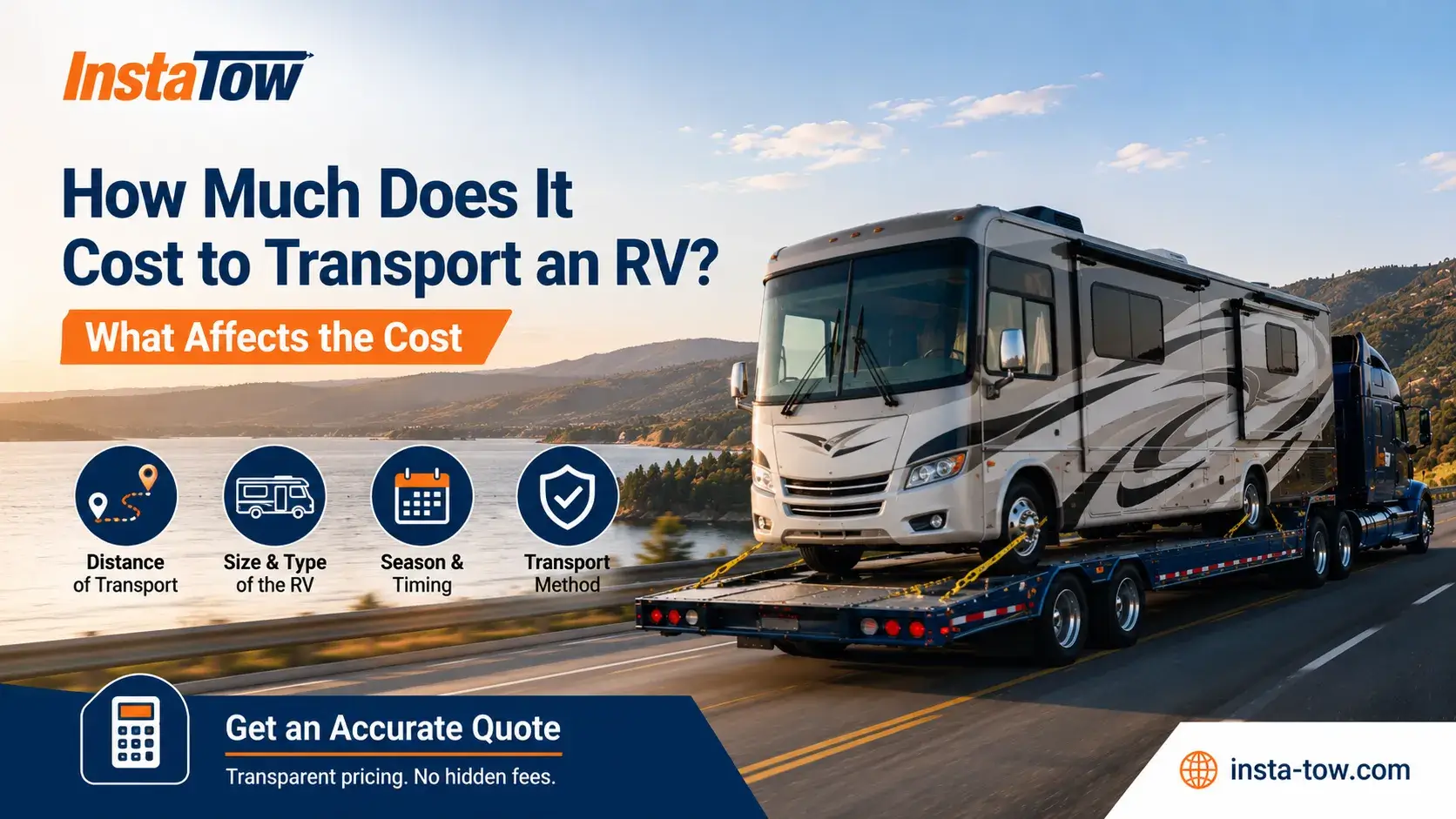
If you are planning a trip or buying a new vehicle, you likely find yourself asking, how much does it cost to transport an rv? Generally, you can expect to pay anywhere from $1.00 to $4.00 per mile depending on the specific logistics of your route.
Price fluctuations occur because of variables like total distance, your specific RV type, the current shipping method, and seasonal demand.
Many owners wonder, how much does it cost to transport an rv, and finding the right balance between budget and service quality remains the most important part of the process.
Detailed breakdown of average pricing by distance.
Analysis of how different RV types impact your final invoice.
Review of essential factors that influence industry rates.
Comparison of available professional transport methods.
Actionable tips to secure the best possible value for your move.
Average Cost to Transport an RV
Understanding the average price provides a helpful starting point, though your final quote will vary based on your specific requirements.
We look at broad industry standards here to give you a baseline, while later sections dive into how specific variables change the math for your unique trip.
Navigating the market for professional RV shipping services requires looking at both local and long-distance options to find a price that fits your budget.
Average RV Shipping Cost at a Glance
Note: These estimates are based on industry averages and can change based on current fuel prices, vehicle size, and the specific route.
Average Cost Per Mile to Transport an RV
The cost per mile metric functions as the most reliable way to estimate your budget regardless of the destination.
This figure typically decreases as the total mileage increases because fixed costs, such as driver time and logistical preparation, are spread across a longer trip.
To calculate this, simply take your total quote and divide it by the number of miles, ensuring you understand the baseline of the cost to ship an RV.
Example: If a company quotes you $1,200 to move a trailer 600 miles, your cost per mile is $2.00.
Shorter trips often carry a higher per-mile rate due to minimum driver fees.
Long-distance shipments benefit from economies of scale.
Fuel surcharges can fluctuate the per-mile cost depending on market rates.
RV Transport Cost by Distance
Distance acts as the primary driver for shipping pricing, representing the most significant variable in your final invoice.
Generally, the cost per mile decreases as the total mileage increases because the driver's fixed costs, such as loading time and administrative overhead, are amortized over a longer journey.
While local trips might look cheaper on paper, you are often paying a premium for the convenience of short-haul logistics.
Understanding the pricing tiers by distance helps you anticipate the final figure when you search for how much does it cost to transport an rv for your specific route.
Under 300 Miles
Short-distance moves often carry the highest cost-per-mile rates because drivers must charge a minimum fee to cover their time and fuel regardless of the short trip.
Expect these local jobs to have higher relative pricing compared to cross-country travel.
Average Cost: $400 - $900.
Average Duration: 1 to 2 days.
Best Use Case: Local dealership transfers or moves between neighboring storage facilities.
Example: Transporting a vehicle from an Alexandria dealer to a private residence 50 miles away typically falls into this bracket.
300-700 Miles
Regional transport usually offers a slightly more favorable price per mile than local routes, as the driver can complete the trip in a single day or two.
You will find that these quotes fluctuate based on driver availability in your specific region.
Average Cost: $800 - $1,500.
Average Duration: 2 to 4 days.
Example: A 500-mile trip often allows for efficient scheduling, which helps stabilize your total RV relocation cost.
700-1,500 Miles
Mid-range distances strike a balance where the cost per mile begins to drop significantly, offering better overall value.
Many RV transport companies prioritize these routes, making them a common choice for those moving between states.
Average Cost: $1,400 - $2,500.
Average Cost Per Mile: Approximately $1.50 - $2.00.
Example: A move from the Midwest to the Southeast frequently lands in this category.
Over 1,500 Miles
Long-haul shipments represent the most economical choice per mile, as the driver spends more time on the road and less time loading or unloading.
If you need to transport RV across country, you will benefit from these economies of scale, even though the total bill is higher.
Average Cost: $2,200 - $4,500.
Average Duration: 5 to 10 days.
Example: A cross-country trip from California to Florida allows carriers to optimize fuel usage, keeping the overall price competitive.
RV Shipping Cost by RV Type
The size, weight, and aerodynamic profile of your recreational vehicle dictate the specific equipment required for transit and directly influence your final rate.
Heavier vehicles require specialized heavy-duty trucks and equipment, while smaller campers can often be moved using standard light-duty towing vehicles.
Knowing your exact vehicle specifications allows you to better estimate how much does it cost to transport an rv based on its unique physical footprint.
Travel Trailer
Travel trailers are common, making them relatively straightforward to move for most carriers.
Costs vary based on the length of the trailer and the total weight, which determines if a standard or heavy-duty truck is necessary.
Average Cost: $1.50 - $2.50 per mile.
Fifth Wheel
These units are heavier and often taller than standard trailers, requiring a specialized hitch system for transport.
Because of their size and the specific hitch requirement, shipping them is typically more expensive than towing a standard travel trailer.
Average Cost: $1.75 - $3.00 per mile.
Motorhome Class A
Class A motorhomes are the largest and heaviest vehicles on the road, often requiring specialized tow-away RV transport or professional drive-away services.
Due to their immense size and fuel consumption, their transport rates sit at the top end of the spectrum.
Average Cost: $2.50 - $4.50 per mile.
Motorhome Class B
Often called camper vans, these are the most compact motorized RVs.
Their smaller footprint and lower weight make them much easier to handle than their larger counterparts, resulting in more affordable RV shipping rates.
Average Cost: $1.25 - $2.25 per mile.
Motorhome Class C
These units sit between the Class B and Class A in terms of size.
They are generally easier to move than a Class A but still require a professional operator who understands the unique height and weight distribution of the vehicle.
Average Cost: $2.00 - $3.50 per mile.
Toy Hauler
Toy haulers are distinct because they have a garage space in the rear.
Their weight can fluctuate significantly depending on whether the toys (like motorcycles or ATVs) are inside, which significantly impacts the load the truck must pull.
Average Cost: $1.80 - $3.00 per mile.
Pop-Up Camper
Pop-ups are lightweight and compact, making them the most budget-friendly option to ship.
Because they do not require heavy-duty machinery or complex RV shipping services, you will often pay the lowest rates for these units.
Average Cost: $1.00 - $1.80 per mile.
Destination Trailer
These trailers are designed for stationary living and are often much wider and heavier than standard travel trailers.
Their size often requires special permits, which increases the total cost to ship an RV significantly compared to more mobile options.
Average Cost: $2.00 - $4.00 per mile.
What Affects the Cost to Transport an RV?
Carrier pricing is rarely a flat fee; it is a complex calculation based on specific logistics, market conditions, and the technical requirements of your vehicle.
While base rates exist, the final cost to ship an RV fluctuates because carriers must account for operational overhead, regulatory requirements, and the sheer effort required to move different classes of vehicles.
Understanding these variables empowers you to compare quotes effectively and identify if a low bid might actually result in hidden fees later.
Distance
Distance remains the core driver of pricing because it determines fuel consumption, driver wages, and equipment wear.
While the price per mile often decreases on longer hauls due to highway efficiency, the total volume of miles is the most significant line item in your budget.
Fixed Costs: Drivers require compensation for their time regardless of miles.
Efficiency: Longer routes allow carriers to optimize fuel and route planning.
Example: A 1,000-mile trip generally yields a lower rate per mile than a 100-mile trip because the driver maximizes their daily transit time on the road.
RV Size and Weight
Your vehicle's physical dimensions and weight directly dictate the type of equipment a company must dispatch to complete the job.
Heavier, wider, or taller units require specialized heavy-duty trucks and significantly impact operational costs.
Heavy Duty Requirements: Heavier RVs necessitate trucks with higher towing capacities.
Fuel Impact: Larger, heavier loads lead to increased fuel consumption, which carriers pass on to the customer.
Equipment: Specialized equipment increases the overhead for RV transport companies.
RV Condition
The operational status of your recreational vehicle determines whether it can be driven, towed, or if it requires a flatbed.
Moving a non-running unit creates significant challenges, as it requires winching and specialized loading equipment.
Running RVs: These are easier to load and often cheaper to transport.
Non-Running RVs: These require extra time, labor, and potential equipment for winching, increasing the final invoice.
Pickup and Delivery Locations
The accessibility of your pickup and delivery points plays a critical role in pricing, as remote locations often require additional travel time for the driver.
Routes between major metropolitan hubs are frequently cheaper than those requiring navigation into rural or mountainous areas.
Major Hubs: High traffic areas have more carriers, leading to competitive pricing.
Rural Areas: Limited access and longer travel times for the driver increase costs.
Example: Shipping to a central logistics hub in Texas is typically cheaper than delivering to a remote cabin in the Rocky Mountains.
Time of Year
Seasonal demand creates significant price swings in the shipping industry, often referred to as the Snowbird effect.
During peak migration seasons, carrier capacity tightens, causing rates to rise, while off-peak times may offer more negotiation leverage.
Peak Demand: Late spring and early autumn see higher rates due to high volume.
Off-Season: Winter months may offer lower costs but can present weather-related challenges.
Shipping Method
The method you choose drive-away, tow-away, or flatbed directly influences your price, as each requires different levels of labor and equipment.
Selecting the appropriate method involves balancing your budget against the need for vehicle protection.
Insurance Coverage
While all reputable transporters carry basic insurance, the level of coverage can impact your total price.
Upgrading to higher liability or comprehensive coverage offers peace of mind, though it adds to the total RV relocation cost.
Fuel Prices
Fuel surcharges are a standard industry practice, adjusting your final price based on the current market cost of diesel.
When global fuel prices spike, carriers must adjust their quotes to maintain profitability, meaning your quote today may differ from one provided months ago.
Oversized Permits
Vehicles exceeding standard height, width, or weight limits trigger legal requirements for state-issued permits.
Securing these permits is time-consuming and involves extra fees, which directly inflate the cost to transport an rv for larger units.
Expedited Shipping
Need your RV moved yesterday? Expedited shipping requires carriers to prioritize your load, often disrupting their pre-planned routes to get your vehicle to its destination faster.
Pricing: Expect a premium markup of 20% to 50% over standard rates for expedited service.
Availability: While convenient, it is subject to driver availability.
RV Transport Cost by Shipping Method
Choosing the right shipping method balances your specific vehicle needs, safety requirements, and your total budget.
Different methods offer unique advantages, from the hands-off convenience of a professional driver operating your unit to the high level of protection offered by flatbed trailers.
Understanding how these methods influence RV shipping rates is vital to ensuring your vehicle arrives safely without breaking your financial plan.
Drive-Away Service
In a drive-away service, a professional driver operates your motorized RV (like a Class A or Class C) and drives it to the destination.
This method is often the most efficient for motorized units because it eliminates the need for a towing vehicle or trailer.
Pros: Generally faster, avoids towing wear and tear on the RV chassis.
Cons: Accumulates mileage on your vehicle.
Best For: Motorhomes that are in good working condition.
Tow-Away Transport
Tow-away service involves a commercial truck hitching to your trailer or fifth wheel and pulling it to the delivery location.
This is the industry standard for towable units, relying on the RV's own axles and tires for the journey.
Pros: Cost-effective and widely available.
Cons: Exposes your RV to road debris and potential tire wear.
Best For: Travel trailers, fifth wheels, and pop-up campers.
Flatbed Transport
Flatbed transport secures your RV onto a large, flat trailer, effectively shielding it from the road and keeping it stationary during transit.
This provides the highest level of protection, though it is usually the most expensive option.
Pros: Maximum protection from road conditions and reduced wear on the RV.
Cons: Higher costs due to the specialized equipment required.
Best For: High-value, delicate, or vintage RVs.
Professional RV Carrier
Hiring a professional RV transport company ensures that the driver is specialized in handling these specific vehicles, rather than a general freight driver.
While this may command a premium, it provides a crucial layer of safety and expertise that protects your asset.
Expertise: Carriers specialize in the unique handling requirements of RVs.
Compliance: Professional firms manage all state and federal regulations.
Reliability: Established companies offer consistent communication and better insurance packages.
Hidden Costs You Should Know Before Shipping an RV
Quotes often represent base rates that cover the standard transport process, but several variables can alter the final price significantly.
Awareness of these potential extras ensures you can accurately answer the question how much does it cost to transport an rv when vetting different companies.
Some expenses arise from your specific delivery timeline or route requirements, while others are external market factors.
Fuel Surcharges
Fuel surcharges represent a common industry fee that adjusts based on the fluctuating price of diesel.
If the price of fuel rises sharply after your initial quote, carriers frequently apply a surcharge to cover the difference in operational costs.
This fee is often variable, meaning it depends on the market index rather than a fixed internal company policy.
Why it matters: It prevents the carrier from losing money on longer routes during market volatility.
Best practice: Ask for a quote that includes a fuel surcharge cap or a clear explanation of how it is calculated.
Insurance Upgrades
While professional RV transport companies carry liability and cargo insurance, the coverage limit might not fully protect the total value of a high-end unit.
Upgrading your insurance provides peace of mind and covers potential damage that exceeds the carrier's standard policy.
When to buy: Consider this if you own a luxury motorhome or a vintage unit with significant sentimental and market value.
Cost impact: This usually adds a specific flat fee or percentage to your total RV relocation cost.
Storage Fees
Storage fees occur when there is a mismatch between the carrier’s arrival time and your ability to receive the vehicle.
If you are not present at the agreed-upon location, or if the pickup site is not ready, the carrier may charge a daily rate to hold your vehicle at a secure facility.
Avoidance strategy: Coordinate schedules tightly with your carrier to ensure immediate handover upon delivery.
Common trigger: Unexpected delays in site preparation at your destination.
Permit Fees
Large or wide vehicles often require special state-issued permits to travel on public roads.
These fees vary by state and size, and the carrier passes these costs directly to the customer.
Why they are required: They cover the administrative cost of legal road usage for oversized loads.
Impact: Larger units require more permits, directly raising the cost to ship an RV.
Real Examples of RV Shipping Costs
Real-world scenarios help you visualize how distance and vehicle type combine to influence the final invoice.
While every quote depends on current driver availability, these examples illustrate the typical range you might encounter when researching how much does it cost to transport an rv for your next move.
Note: These figures serve as benchmarks. Prices change based on seasonal demand, fuel indices, and specific carrier availability.
Key takeaway: Long-haul routes involve higher total costs but often lower rates per mile, whereas local moves carry higher per-mile premiums. Always secure a custom quote to understand the exact RV shipping rates for your specific pickup and drop-off points.
How to Calculate the Cost to Transport an RV
You can estimate your final invoice by applying a basic formula that combines your mileage with the current market rate per mile, then adding potential surcharges.
While you will always need a formal quote for the exact cost to ship an RV, running these numbers yourself provides a reliable baseline for budget planning.
Most carriers operate using a standard formula: (Total Miles × Rate per Mile) + Fees = Total Estimated Price.
Identify the total mileage: Use a standard mapping tool to find the distance between your pickup and drop-off points.
Determine your vehicle's classification: Heavier, oversized vehicles command a higher rate per mile than smaller trailers.
Apply the estimated rate per mile: Multiply the distance by the current market average for your vehicle type (typically ranging from $1.00 to $4.00 per mile).
Add known surcharges: Include potential costs for fuel adjustments, permit fees for oversized loads, and any desired insurance upgrades.
Example Calculation: If you need to move a travel trailer 800 miles and the average quote is $1.75 per mile:
Base Transport: 800 miles × $1.75 = $1,400.
Potential Permit/Fuel Fee: $150.
Total Estimate: $1,550.
Using this method allows you to quickly assess if a quote you receive is within the standard range or if it includes unexpected markups.
RV Transport vs. Driving It Yourself
When determining how much does it cost to transport an rv, many owners pause to weigh the expense of professional RV shipping services against the experience of towing or driving the unit themselves.
Driving it yourself might seem like a budget-friendly option, but it often ignores hidden costs like fuel for a heavy-duty truck, hotel stays, time away from work, and the physical wear and tear on your vehicle.
Conversely, hiring a professional removes the stress of navigating a large vehicle through traffic or unfamiliar terrain.
Choose Professional Transport if: You lack a heavy-duty truck, want to minimize vehicle mileage, or need to avoid the fatigue of long-distance driving.
Choose DIY if: You enjoy the journey, have the proper towing vehicle, have plenty of time, and view the trip as part of your vacation.
Ultimately, the best choice depends on whether your priority is saving money or saving time and effort.
Professional RV transport companies provide a turn-key solution that allows you to fly to your destination and meet your vehicle there, rather than spending days on the road managing a massive load.
How to Save Money on RV Transport
You can reduce your RV relocation cost significantly by implementing strategic planning, such as booking during the off-season or maintaining flexible pickup dates.
Because carrier schedules are dynamic, adjusting your timeline to match their availability often allows you to negotiate more competitive RV shipping rates.
By preparing your unit thoroughly and comparing multiple quotes from reputable RV transport companies, you ensure that your budget is spent on quality service rather than avoidable fees.
Book During Off-Peak Times: Shipping in late autumn or winter, when demand is lower, often results in cheaper quotes compared to the peak summer travel season.
Be Flexible with Dates: If you are not in a rush, providing a wider window for pickup and delivery allows carriers to consolidate your load with others, lowering your overall price.
Obtain Multiple Quotes: Comparing at least three different RV transport companies helps you identify outliers and negotiate a fairer price.
Prepare Your RV: Ensure your unit is ready for transit by emptying holding tanks, removing loose interior items, and securing all doors and windows. This reduces the time the driver spends on-site and avoids extra service fees.
Consolidate Shipments: If you know others in your area looking to move their vehicles, some carriers offer multi-stop discounts that share the transport costs across multiple owners.
How Long Does RV Transport Take?
RV transport typically takes anywhere from 1 to 2 weeks for cross-country routes, though local moves are often completed within a few days.
The duration depends heavily on the total distance, the specific route taken, and current road conditions such as weather or traffic.
Understanding these timelines helps you coordinate your logistics effectively when you decide to transport RV across country or move it to a local storage facility.
Distance: The primary factor in transit time, as legal driving limits restrict the number of miles a driver can cover per day.
Route Density: Shipments traveling on major highway corridors often move faster than those requiring navigation into rural or difficult-to-reach locations.
Weather and Traffic: Unforeseen events, such as snowstorms or heavy highway construction, can add days to the delivery schedule.
Carrier Availability: Booking in advance with professional RV shipping services allows carriers to plan their routes efficiently, which helps keep your delivery on track.
Preparation: Providing an easily accessible pickup location ensures the driver can load your vehicle without delays, which is a key part of managing your cost to ship an RV.
How to Choose the Best RV Transport Company
Selecting a reliable partner to move your vehicle is the most important step in the shipping process.
Because you are entrusting a high-value asset to a third party, you must look beyond the lowest price and prioritize credentials, insurance, and professional transparency.
Finding the right provider balances your budget with the safety of your investment, giving you peace of mind that your unit will arrive in the same condition it left.
Verify FMCSA Licensing: Always ask for the company’s USDOT and Motor Carrier (MC) numbers. You can verify their status on the Federal Motor Carrier Safety Administration (FMCSA) website to ensure they are active and authorized for property transport.
Confirm Insurance Coverage: Reputable companies carry comprehensive cargo and liability insurance. Ask for a Certificate of Insurance (COI) and review the policy details, specifically regarding deductibles and exclusions.
Analyze Review Patterns: Look at Google Reviews and Better Business Bureau (BBB) history. Be wary of companies with hundreds of reviews posted in a very short window or those with identical, generic praise. Check how the company responds to negative feedback, as this shows how they handle issues.
Demand Transparent Pricing: A professional firm provides a detailed, written contract. Avoid companies that offer too good to be true low prices, as these are often bait-and-switch tactics designed to add hidden fees later.
Evaluate Communication: A good partner answers questions patiently and provides clear pickup/delivery windows. If a representative pressures you to book immediately without answering your questions, consider it a red flag.
Get an Accurate RV Transport Quote Today
Knowing exactly how much does it cost to transport an rv requires a personalized quote based on your unique route, timeline, and vehicle specifications.
Online calculators provide a great baseline, but an accurate estimate accounts for current fuel indices, seasonal demand, and specific vehicle dimensions that generic tools might miss.
Don't leave your transport logistics to chance speak with a professional who understands the nuances of modern RV hauling.
Prepare Your Details: Have your pickup and drop-off zip codes, the make/model of your RV, and your preferred timeline ready.
Discuss Your Needs: Inform the agent if the vehicle is in running condition, if it requires specialized trailers, or if you need expedited delivery.
Review Your Estimate: Ensure your final quote includes all service fees, insurance coverage, and a clear breakdown of costs so you know exactly what you are paying for.
Take the next step in planning your move.
Contact the Instatow team today for a transparent, no-obligation assessment.
Our experts are ready to provide a custom plan that ensures your vehicle reaches its destination safely, efficiently, and at a competitive price.
Get Your Free RV Transport Quote Now
Frequently Asked Questions
These common inquiries address specific scenarios and logistical details often missed in general guides, helping you finalize your planning and understand the nuances of the shipping process.
1. Can I ship personal items inside my RV during transport?
Most carriers strongly discourage leaving personal belongings inside the vehicle.
Items can shift during transit, causing damage to the interior, and most insurance policies do not cover lost or damaged personal goods.
It is best to clear the vehicle completely to reduce weight and prevent liability issues.
2. Do I need to be present for pickup or delivery?
You or a designated representative must be present to sign the Bill of Lading at both pickup and delivery.
This document records the condition of the vehicle before and after transport.
If you cannot be there, ensure your representative has the authority to inspect the unit and sign off on your behalf.
3. Is my RV covered by insurance during transport?
Reputable RV transport companies provide cargo and liability insurance as part of their service.
Always ask for a copy of their certificate of insurance and verify the policy limits.
While basic coverage is standard, high-value or vintage units often warrant purchasing additional gap insurance to ensure full protection against all potential risks.
4. Can I track my RV during the shipping process?
Yes, most professional carriers provide regular updates or access to a tracking system.
You should receive periodic communication from the driver or the dispatch team regarding the status and location of your vehicle.
Confirm the frequency and method of these updates whether by phone, email, or a digital portal before you finalize your booking.
5. How far in advance should I book my RV transport?
Booking at least two to four weeks in advance is recommended, especially during peak seasons like spring and autumn.
Advanced scheduling secures your spot with a reliable carrier and often allows for better pricing negotiations.
Last-minute bookings are possible but typically come at a premium cost due to limited availability.
6. Does the driver need the keys to my RV?
Yes, the driver will need the keys for the ignition and any exterior compartments.
If your unit is being towed or transported via flatbed, they may not need the ignition keys, but they definitely require access to the compartments for inspection and securing purposes.
Keep a spare set of keys for yourself to avoid any locking issues.
7. Are there size limitations for RV shipping?
Yes, extremely large or wide RVs may exceed standard road width and height limits, requiring specialized permits and route planning.
While most professional carriers can handle oversized loads, you must disclose the exact dimensions of your unit during the quoting process to ensure they have the necessary equipment and can obtain the required legal permits.
8. What happens if my delivery location is inaccessible?
If a large truck cannot reach your specific address due to narrow streets, low hanging trees, or weight-restricted bridges, you must arrange a safe, alternative drop-off point.
Many carriers will work with you to find a nearby commercial parking lot or dealership where they can safely unload the vehicle.
9. Do I need to clean the RV before shipping?
Cleaning is highly recommended, both inside and out.
A clean exterior allows the driver to perform an accurate inspection of the paint and bodywork, ensuring there are no pre-existing damage disputes.
Emptying all holding tanks and securing interior cabinets also prevents leaks and damage caused by shifting items during transit.
10. What is the cheapest time of year to transport an RV?
Late autumn and winter generally offer the most competitive rates.
Demand for RV shipping services drops significantly when the Snowbird migration ends, giving you more leverage to negotiate pricing.
Shipping during these off-peak months helps avoid the inflated demand-based surcharges common in the summer.
11. What if my RV is non-running?
Shipping a non-running RV requires specialized equipment, such as a winch, to load and unload the unit.
You must inform the transport company about the non-operational status upfront.
This service is more labor-intensive and generally results in a higher cost than transporting a drivable or towable vehicle.
12. How do I prepare my RV for a flatbed transport?
Flatbed transport involves securing the unit to the trailer, so you must ensure all steps, power cords, and loose exterior items are retracted or removed.
Verify that all hitch components are properly stowed.
Follow the specific instructions provided by your carrier, as they may have unique requirements to ensure the vehicle is stable for the duration of the trip.