
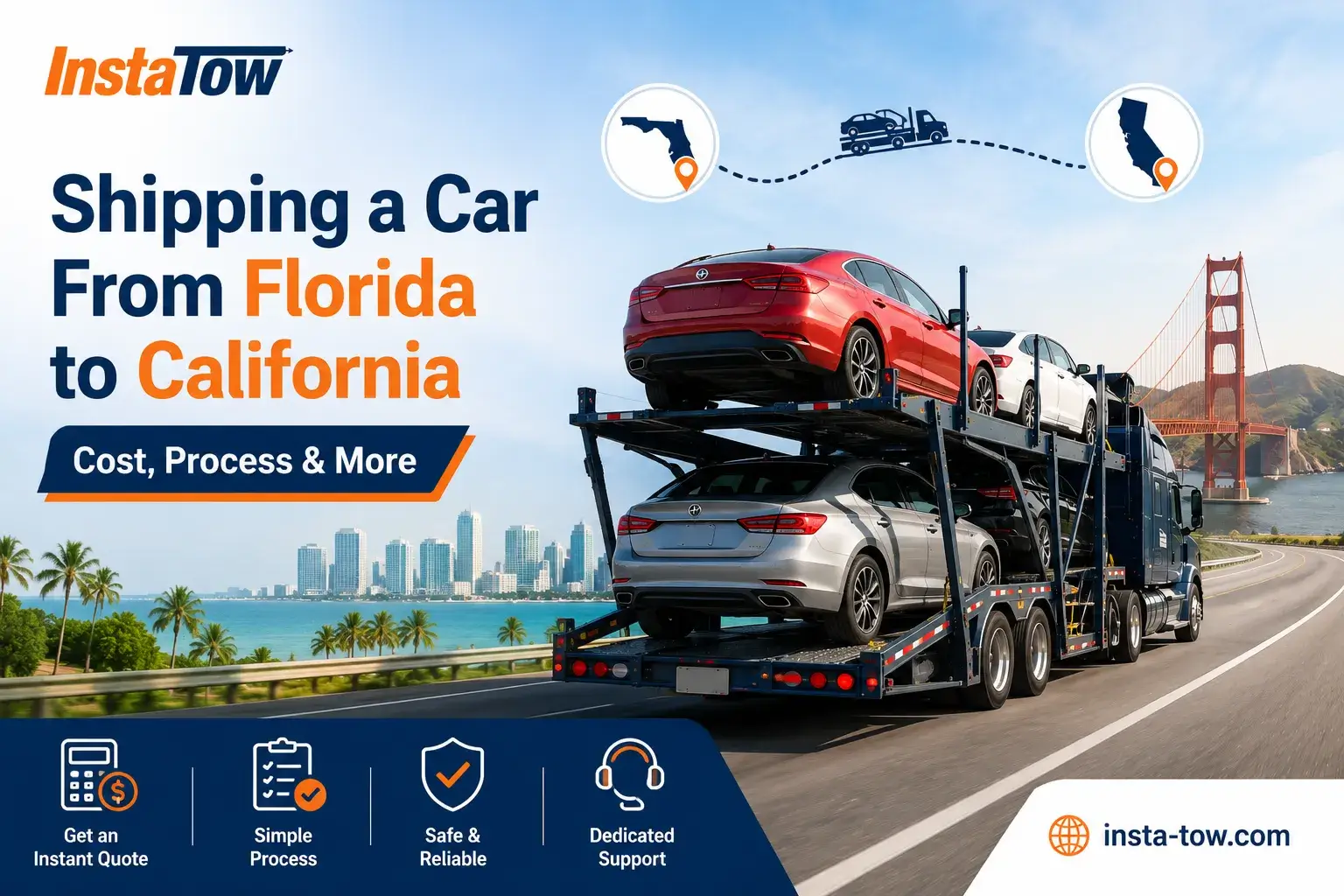
Shipping a car from Florida to California requires strategic planning, as the journey covers over 2,500 miles and involves multiple transit variables.
This guide breaks down pricing factors, essential preparation steps, and the logistics of professional transit to ensure your vehicle arrives safely and on schedule at its new location.
You will find clarity on how to manage the timeline, understand insurance protections, and select the right transport method for your specific needs.
Florida to California Car Shipping: Everything You Need to Know
Choosing to facilitate shipping a car from Florida to California ensures your vehicle is handled by experts, preventing the significant wear and tear associated with long-distance driving.
Professional auto transport services provide a secure, efficient alternative to the road, leveraging established logistics to move assets across state lines without the mileage accumulation.
InstaTow facilitates this transition through a secure door-to-door service, providing you with real-time tracking updates and comprehensive transport insurance to protect your investment from pickup to final arrival.
Professional carriers load your vehicle securely onto a specialized truck equipped for long-haul travel.
Transit routes are optimized for safety and efficiency, accounting for traffic patterns and weather conditions across diverse terrains.
Final delivery occurs at your requested destination, whether it is a private residence, a business facility, or a specific drop-off terminal.
Who Uses Florida to California Car Shipping?
Individuals and businesses utilize this service to simplify the logistical burden of moving a vehicle over such a vast distance.
Relocating homeowners: Individuals or families moving permanently for work or lifestyle changes often find it more practical to ship their primary vehicle.
Vehicle buyers: Purchasing a car from a dealership in another state often requires a reliable car delivery service to get it home safely.
Military personnel: Service members frequently require professional logistics to manage vehicle transport during Permanent Change of Station (PCS) orders.
Students: College students moving across the country for university rely on transport to keep their vehicles without enduring long-distance travel.
Snowbirds: Seasonal residents traveling between these two regions need a dependable way to keep their vehicle where they spend their time.
Corporate fleets: Businesses relocating assets or vehicles for sales purposes utilize a nationwide shipping network to maintain their inventory schedules.
How Much Does Shipping a Car From Florida to California Cost?
The average price for shipping a car from Florida to California typically lands between $1,400 and $2,400, though rates fluctuate based on market demand and specific transit dates.
Getting an accurate vehicle shipping cost requires considering current fuel surcharges and carrier availability, which often change weekly.
The tables below provide a baseline for your budgeting process to help you anticipate standard market rates.
Average Shipping Cost
Estimated Cost by Popular Route
What Affects the Cost of Shipping a Car?
Final pricing for transporting your vehicle depends on several operational variables that directly influence the carrier’s expenses.
Understanding these factors allows you to make informed decisions about your vehicle shipping cost and helps identify where you might save or where paying for a premium service adds genuine value.
Distance and Route: The cross-country span between Florida and California is the primary driver of expense, as it determines fuel consumption and driver time.
Vehicle Size and Weight: Larger vehicles, such as SUVs, trucks, or minivans, take up more space on the trailer and increase the total load weight, resulting in higher fees.
Open vs Enclosed Transport: Choosing an enclosed car carrier protects your vehicle from road debris and weather, which commands a premium price compared to standard open trailers.
Seasonal Demand: Peak moving seasons, such as the winter snowbird migration, increase demand for space, often driving prices upward.
Pickup and Delivery Locations: Shipping from major metropolitan hubs is generally cheaper than requesting pickup in remote or rural areas that require the driver to deviate from main highway routes.
Expedited Shipping: If you require guaranteed pickup or a strictly defined delivery window, expedited options cost more because they prioritize your vehicle over other scheduled loads.
How Long Does Shipping a Car From Florida to California Take?
The typical timeframe for cross-country car shipping between these regions ranges from 7 to 10 days.
This duration accounts for the 2,500+ mile distance, federal driver rest mandates, and the logistics of traversing multiple states.
While most carriers aim for this window, external factors such as traffic volume, weather patterns, and specific delivery routes can influence the exact arrival date of your vehicle.
Average Transit Time
Factors That May Delay Delivery
Even with professional planning, several uncontrollable variables can shift the expected timeline.
Being aware of these helps manage expectations for the pickup and drop-off process:
Severe Weather: Storms, heavy snow, or flooding along the route can force drivers to take detours or pause operations for safety.
Mechanical Issues: Unexpected truck maintenance requirements can cause temporary halts in the transit schedule.
Driver HOS Rules: Federal Hours of Service (HOS) regulations strictly limit how many hours a driver can be on the road daily, impacting total transit speed.
Remote Locations: Pickup or delivery in rural, off-highway areas often requires more time for the carrier to navigate local roads.
Traffic Congestion: Major urban construction or unexpected accidents in high-traffic corridors like Los Angeles or Miami can create delays.
Standard vs Expedited Shipping
you can also read: Car Transport from Florida to Colorado | Fast, Affordable & Insured Shipping with Instatow
Which Car Shipping Option Is Right for You?
Choosing the correct method for shipping a car from florida to california depends on your vehicle's value, your budget, and your specific protection requirements.
While most daily drivers are perfectly suited for standard road transport, luxury or vintage vehicles often benefit from specialized handling.
InstaTow offers structured tiers, including Standard and Luxury options, to ensure you receive the level of service that aligns with your vehicle's needs.
Open Car Transport
Open transport remains the most popular and cost-effective method for moving vehicles across the United States.
Your car is loaded onto an open carrier transport trailer alongside other vehicles, keeping the service affordable through shared logistics.
This method is safe, efficient, and used by dealerships and individuals alike for the vast majority of standard vehicle models.
Enclosed Car Transport
Enclosed shipping utilizes a trailer with hard sides or specialized covers to protect your vehicle from wind, rain, road debris, and dust.
This method is the standard choice for classic cars, exotic sports cars, or high-value vehicles where cosmetic condition is the highest priority.
If you select an enclosed car carrier, you are paying for the peace of mind that comes with complete climate and element shielding.
Door-to-Door Shipping
Door-to-door service is the most convenient option, as it eliminates the need for you to drop off or pick up your vehicle at a terminal.
The carrier arrives as close to your specified address as safely possible, handling the loading and unloading directly.
This service saves significant time and removes the logistical headache of traveling to a centralized depot.
Which Option Offers the Best Value?
How the Florida to California Car Shipping Process Works
The process of shipping a car from Florida to California operates as a straightforward sequence of scheduling, inspection, and transit management.
Once you finalize your quote, the carrier coordinates with your location to ensure a smooth pickup, followed by a secure transit phase and a verified delivery at your destination.
This systematic approach ensures that shipping a car from florida to california remains predictable and secure, minimizing risks throughout the long-distance transport.
1. Request Your Quote
Start by submitting your vehicle details such as make, model, and year along with your pickup and delivery zip codes.
This allows logistics teams to calculate an accurate vehicle shipping cost based on current carrier availability and fuel pricing.
2. Schedule Your Pickup
Once you approve the quote, a dedicated agent coordinates the dispatch of a carrier to your location.
You will receive a window for pickup that aligns with your timeline, ensuring the driver has enough notice to integrate your vehicle into their route effectively.
3. Vehicle Inspection
Before the driver loads your car onto the transport trailer, they conduct a thorough visual inspection to document the vehicle's condition.
You will review this report and sign it, creating an official record of the car's state at the moment of handover.
4. Safe Transportation
Your vehicle is secured onto the trailer using industry-standard tie-downs to prevent movement during transit.
Whether you chose an open carrier transport or an enclosed option, the carrier proceeds along a planned route, with drivers adhering to strict safety and regulatory guidelines.
5. Delivery and Final Inspection
Upon arrival in California, the driver contacts you to confirm the drop-off time.
You conduct a final walk-around inspection, comparing the car to the initial report to ensure everything matches, before signing the final delivery paperwork.
How to Prepare Your Vehicle Before Shipping
Preparing your vehicle involves a few critical steps that simplify the loading process and ensure compliance with transport safety standards.
Completing these tasks before the driver arrives helps avoid delays and protects your car during its cross-country car shipping journey.
You should treat this preparation as a final safety audit for your vehicle.
Vehicle Inspection Checklist
Exterior Wash: Cleaning the car allows the driver to spot and document existing scratches, dents, or paint chips easily during the initial inspection.
Check Fluid Levels: Ensure your engine coolant, oil, and transmission fluids are topped off, but keep the gas tank at approximately one-quarter full to reduce weight.
Tire Pressure: Inflate tires to the manufacturer's recommended pressure to ensure the vehicle rolls smoothly during loading and unloading.
Battery Check: Confirm your battery is fully charged and securely mounted so the vehicle can start easily when it arrives at its destination.
Required Documents
You must have your proof of ownership, such as registration or title, readily available for the driver.
If the vehicle is being picked up from a terminal or port, ensure you have a valid photo ID and any necessary gate passes to expedite access to the loading area.
Remove Personal Belongings
Remove all personal items from the cabin and trunk, including electronics, loose cables, and valuables.
Transport companies are generally not liable for items left inside the vehicle, and excess weight can cause issues with Department of Transportation (DOT) weight limit compliance.
Pickup Day Checklist
Deactivate Alarms: Ensure all aftermarket alarms are disabled so they do not trigger during transport.
Provide Keys: Hand over the primary key or fob required for both the ignition and trunk access.
Retract Antennas: If your vehicle has a manual antenna, lower it completely to prevent damage.
Secure Loose Parts: Fold in side mirrors and remove or secure any custom spoilers or exterior attachments.
Why Ship Your Car Instead of Driving It?
Choosing professional transport over driving yourself is the most effective way to protect your vehicle’s long-term value and minimize the physical toll of a 2,500-mile journey.
While driving offers perceived control, shipping a car from florida to california eliminates the stress of cross-country navigation, saves days of your time, and keeps unnecessary mileage off your odometer.
It is a strategic decision that prioritizes both vehicle preservation and personal convenience.
Save Time
A cross-country drive takes several days of intense focus, hotel stays, and fuel stops.
By opting for cross-country car shipping, you reclaim that time to travel by air or complete other essential tasks, as the carrier handles the transit logistics entirely.
Reduce Wear and Tear
Driving your vehicle across the country adds significant mileage to your engine, tires, and suspension.
Professional shipping a car from florida to california keeps your vehicle’s mileage static, preserving its resale value and delaying the need for premature maintenance service intervals.
Avoid Travel Expenses
The cumulative costs of fuel, lodging, food, and potential emergency repairs during a multi-day road trip often exceed the price of professional transport.
When you calculate the total investment required to drive yourself, shipping frequently proves to be the more economical choice.
Improve Safety and Convenience
Navigating diverse weather conditions and unfamiliar highway systems increases the risk of accidents or mechanical failures.
Using a professional service ensures your car is operated by experienced drivers who prioritize safety and use equipment designed for long-haul transit.
Driving vs Shipping: Which Is Better?
Related topics: Secure Auto Shipping: Complete Guide to Safe Vehicle Transport
Why Choose InstaTow for Florida to California Car Shipping?
InstaTow distinguishes itself in the market by combining rigorous safety protocols with a transparent, customer-first service model.
We specialize in shipping a car from florida to california by leveraging a deep understanding of route logistics and high-end vehicle care.
Whether you require a standard transport or high-security, climate-controlled options, our infrastructure is built to deliver your vehicle safely and on schedule.
Licensed and Insured Transport
We maintain comprehensive transport insurance coverage for every vehicle under our care, ensuring you have full protection from pickup to delivery.
Our carriers are fully licensed and bonded, meeting all federal and state regulatory requirements for interstate commerce.
Door-to-Door Service
Our service model centers on maximizing convenience for the client.
We arrange for your vehicle to be picked up at your exact address in Florida and delivered directly to your destination in California, removing the need for you to visit terminals or depots.
Real-Time Shipment Tracking
Stay informed throughout the entire journey with our advanced tracking systems.
You receive regular updates on your vehicle’s location, providing peace of mind as your asset moves across the country toward its final destination.
Transparent Pricing
We believe in clear, upfront communication regarding the vehicle shipping cost.
There are no hidden fees or unexpected surcharges; we provide a detailed quote that outlines every aspect of the transport process, ensuring you know exactly what you are paying for before you book.
Nationwide Carrier Network
Our extensive nationwide shipping network allows us to secure reliable, professional drivers across all major routes.
This capacity ensures we can facilitate shipping a car from florida to california with consistent availability, even during peak seasonal demand.
Get Your Free Florida to California Car Shipping Quote Today
Securing your transport slot in advance is the best way to lock in favorable rates and guarantee availability for your required dates.
Contacting the InstaTow team today allows you to receive a precise, no-obligation quote tailored to your vehicle type and specific route needs, ensuring a smooth experience when shipping a car from florida to california.
Our logistics experts stand ready to assist you with every step of the process.
Visit our website: Use our online quote tool to get an instant estimate based on your zip codes.
Call our team: Speak directly with an agent to discuss special requirements or urgent timelines.
Book with confidence: Confirm your shipment to finalize the logistics and receive your dedicated pickup window.
Receive confirmation: Get all your documentation and tracking details sent directly to your email.
Frequently Asked Questions About Shipping a Car From Florida to California
We have compiled answers to common concerns to provide complete transparency regarding the logistics of shipping a car from florida to california.
If you have a specific inquiry not covered here, our customer support team is available to provide the clarity you need.
Can I ship a non-running vehicle?
Yes, but you must disclose this during the booking process so we can dispatch a truck equipped with a winch to load the vehicle safely.
Can I leave personal belongings inside my car?
Generally, it is best to remove all personal items; carriers often restrict non-factory items due to weight regulations and insurance liability policies.
Is my vehicle insured during transport?
Yes, your vehicle is covered by the carrier's transport insurance while it is in transit, providing financial protection against damages.
How far in advance should I book?
We recommend booking at least 1-2 weeks before your desired pickup date to ensure we can secure the best route and carrier availability.
Can someone else receive my vehicle?
Yes, you can designate a trusted third party to sign for the final inspection and accept the delivery, provided they have your authorization and valid ID.
What happens if my delivery is delayed?
While we strive for accuracy, factors like extreme weather or traffic can occur; our team maintains active communication to update you immediately on any schedule shifts.
Can I change my pickup date after booking?
Contact us as soon as your plans change; while we strive to accommodate modifications, changes may affect carrier availability.
Is enclosed shipping worth the extra cost?
It depends on your priorities; if you are transporting a vintage or high-value vehicle, the extra protection of an enclosed car carrier offers superior peace of mind.