
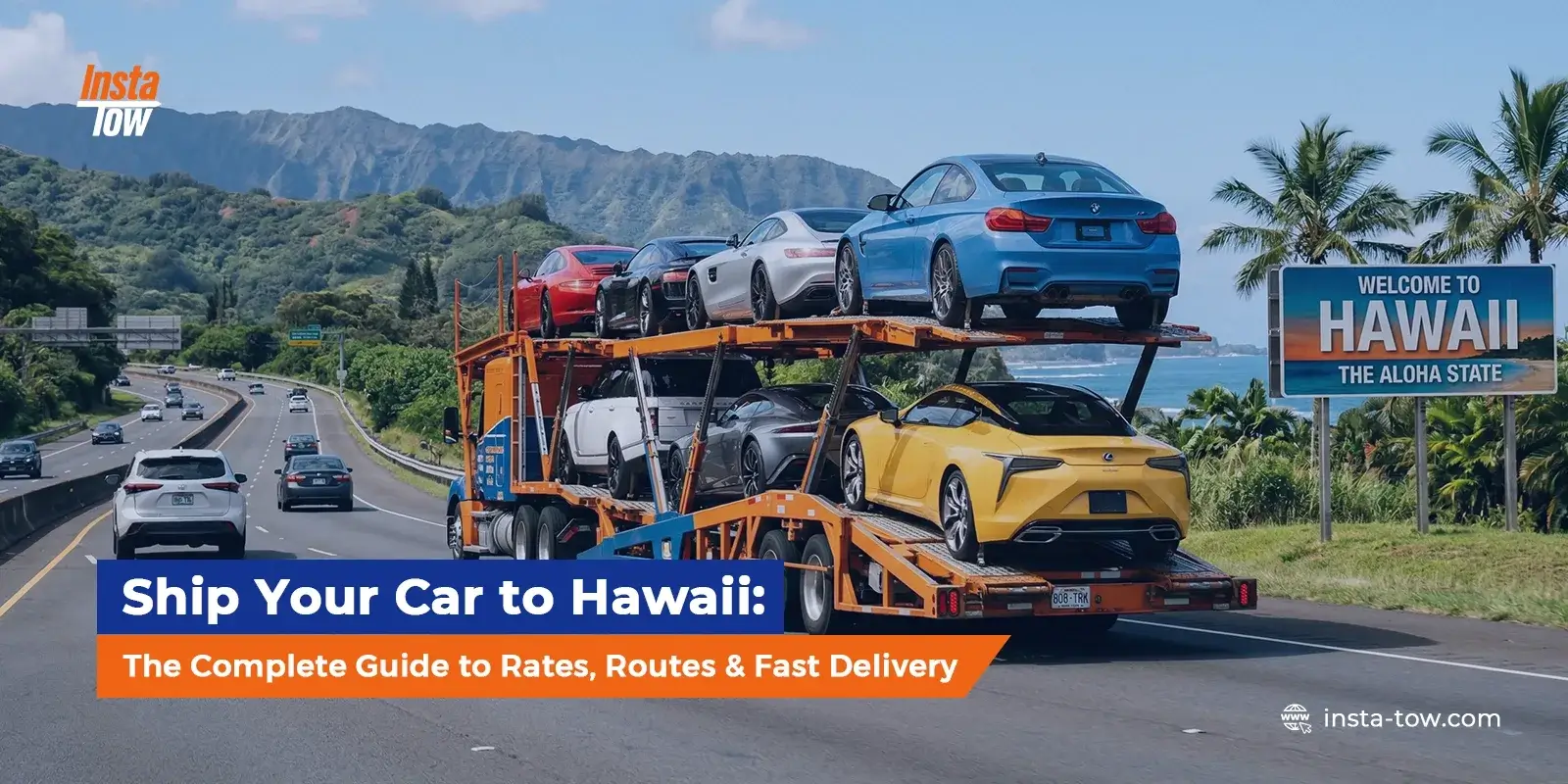
Moving to the Aloha State involves a unique set of logistics, especially when it comes to your vehicle.
To ship your car to Hawaii successfully, you need a partner who understands the intricacies of Pacific maritime routes and the strict agricultural standards of the islands.
At InstaTow, we specialize in seamless mainland-to-island transitions, ensuring your vehicle arrives safely whether you are relocating for work, the military, or a change of pace.
By leveraging strategic port partnerships, we provide a streamlined experience that removes the complexity from over-ocean transport.
Quick Stats for Hawaii Shipping
Average Transit Time: 7-14 days from West Coast ports.
Price Range: $1,500 - $2,800 (depending on vehicle size and origin).
InstaTow Reliability: 99.8% damage-free delivery rate.
Primary Hub: Honolulu (Sand Island).
Expert Hawaii Auto Transport Services by InstaTow
Navigating the waters of the Pacific requires more than just a trailer; it requires a sophisticated network of logistics professionals.
InstaTow provides comprehensive solutions for those looking to ship your car to Hawaii without the stress of navigating port bureaucracy.
Our services are designed to handle everything from the initial mainland pickup to the final inspection in Honolulu or the neighbor islands.
We prioritize transparency and safety, ensuring every customer feels confident as their vehicle traverses thousands of miles of open ocean.
Why We are the Trusted Choice for Mainland-to-Island Shipping
Choosing the right transporter is the most critical decision in the relocation process.
Our reputation is built on a foundation of reliability and specific expertise in the Hawaiian market.
We don't just move cars; we manage a high-stakes logistics chain that involves multiple points of contact and rigorous safety checks.
Customized Logistics: We offer tailored plans for individual owners, corporate fleets, and seasonal residents.
End-to-End Tracking: You will receive updates as your vehicle moves from your driveway to the departure port and onto the vessel.
Comprehensive Insurance: Every shipment is backed by industry-leading coverage to provide total peace of mind during transit.
Local Expertise: Our team understands the specific Island Way of logistics, including local port operations and agricultural requirements.
Direct Carrier Partnerships: Ensuring Your Vehicle Stays in Safe Hands
One of the primary advantages of working with InstaTow is our direct relationship with major maritime carriers.
This ensures that when you ship your car to Hawaii, your vehicle isn't being handed off to unknown third parties.
By maintaining these high-level partnerships, we can guarantee space on vessels and provide more accurate scheduling than traditional brokers.
How Much Does it Cost to Ship a Car to Hawaii?
Budgeting is a central part of any island relocation, and understanding the financial landscape is key to a smooth transition.
When you plan to ship your car to Hawaii, you aren't just paying for ocean freight; you are investing in a coordinated logistics chain that includes port handling, security, and specialized maritime equipment.
On average, most vehicle owners can expect to pay between $1,400 and $2,400 for a standard shipment from the mainland, though several variables can shift this number.
Breakdown of Hawaii Car Shipping Rates: Port-to-Port vs. Door-to-Port
The method of delivery you choose significantly impacts your final invoice.
It is essential to weigh the convenience of a driveway pickup against the cost savings of a terminal drop-off.
Port-to-Port: This is the most economical choice. You deliver your vehicle to a designated West Coast hub (like Long Beach or Seattle) and pick it up at the arrival port in Hawaii.
Door-to-Port: InstaTow coordinates a carrier to pick up the vehicle from your home or office and transport it to the departure port. This is ideal for those living in inland states like Texas or New York.
Inter-Island Transfers: If your final destination is Maui or Kauai, an additional barge fee is typically applied for the final leg from Honolulu.
Terminal Fees: Both departure and arrival ports charge handling fees which are usually bundled into your InstaTow quote for transparency.
Factors Influencing Your Total Quote (Vehicle Size, Seasonality, and Fuel Surcharges)
Your quote is a dynamic figure based on the physical requirements of the shipment and the current economic climate of the shipping industry.
Vehicle Dimensions: Larger SUVs and trucks take up more slot space on a vessel, leading to higher rates than compact sedans.
Time of Year: Demand spikes during the summer and at the end of the year, which can lead to seasonal price adjustments.
Fuel Prices: Ocean carriers apply fuel surcharges that fluctuate based on global oil markets.
Operational Condition: Vehicles that do not run require specialized winching equipment, adding to the labor cost.
Estimated Transit Times: From Your Driveway to the Islands
Timing is everything when coordinating a move.
Knowing exactly when you can ship your car to Hawaii and when you will be reunited with it on the islands allows you to plan your first weeks of island life effectively.
Transit times are generally split into two phases: the inland trek (if applicable) and the ocean voyage.
West Coast Ports (Long Beach, Oakland, Tacoma) to Honolulu
The primary gateway to the islands consists of three major West Coast hubs.
Because of the high volume of traffic, these routes offer the most frequent sailings and the most predictable schedules.
Departure Frequency: Vessels typically depart twice weekly from Southern California.
Ocean Duration: Once the ship leaves the dock, the journey to Honolulu takes approximately 5 to 7 days.
Processing Time: Allow 24-48 hours at both ends for port processing and agricultural inspections.
Direct Routes: Long Beach to Honolulu remains the fastest and most common direct lane in the industry.
Shipping to Neighbor Islands: Maui, Kauai, and the Big Island
If you are heading to Kahului, Nawiliwili, or Hilo, your vehicle will likely transit through Honolulu first before being transferred to a local barge.
The Hub and Spoke System: Honolulu acts as the central hub for almost all incoming mainland cargo.
Barge Schedules: Inter-island barges run on specific weekly schedules, which may add a waiting period in Oahu.
Total Duration: Expect an additional 4 to 10 days for neighbor island delivery compared to Honolulu.
Pickup Flexibility: Local ports may have more limited hours for vehicle retrieval than the major terminal in Honolulu.
Estimated Transit Windows by Region:
West Coast Origins: 7-14 Total Days
Midwest Origins: 14-21 Total Days
East Coast Origins: 20-28 Total Days
Inter-Island (Final Leg): +4-10 Additional Days
The InstaTow Process: 4 Simple Steps to Hawaii Delivery
Streamlining your experience is our priority.
To ship your car to Hawaii successfully, we have distilled the complex logistical chain into a manageable four-step journey.
This structured approach ensures that both you and our carrier teams are aligned on every detail, from the first click on our website to the moment you turn the key in the islands.
Step 1: Instant Quote and Booking
Your journey begins with a transparent, no-obligation quote.
By providing your vehicle's make, model, and pickup location, our system calculates the most efficient route and provides a guaranteed price.
Once you book, a dedicated InstaTow specialist will reach out to confirm your shipping window and provide your unique booking number.
Step 2: Mainland Pickup or Port Drop-off
Depending on your chosen service level, you can either drop your vehicle off at one of our West Coast terminals or have our carrier pick it up directly from your driveway.
During this stage, a detailed Bill of Lading is generated, documenting the vehicle's condition to ensure total accountability throughout the transport process.
Step 3: Ocean Transit and Real-Time Port Tracking
Once your vehicle is secured aboard a specialized Roll-on/Roll-off (RoRo) or container vessel, the ocean leg of the journey begins.
You can track your shipment’s progress as it crosses the Pacific.
We manage all the maritime manifests and port scheduling, so you don't have to worry about the technical details of ocean freight.
Step 4: Hawaii Arrival, Inspection, and Final Pickup
Upon arrival at the destination port (such as Honolulu or Kahului), your vehicle undergoes a final inspection.
We assist in navigating the local terminal requirements, allowing you to simply arrive with your ID and booking number to retrieve your car and begin your island adventures.
You can also read: Car Shipping Damage: How to Prevent It & What to Do If It Happens
Mandatory Requirements for Shipping a Car to Hawaii
The state of Hawaii maintains strict regulations to protect its delicate ecosystem and ensure legal compliance for all incoming cargo.
When you ship your car to Hawaii, you must adhere to specific documentation and preparation standards.
Failure to meet these requirements can lead to significant delays at the port or even the refusal of your vehicle at the terminal.
Documentation: Title, Registration, and Lien Holder Authorization
To clear port security and the Department of Transportation (DOT) checks, you must have your paperwork in order.
The carriers and port authorities require proof of ownership and legal right to transport the vehicle across state lines.
Vehicle Title: A clear copy of the title (front and back) is required for all shipments.
Current Registration: The vehicle must be currently registered in a U.S. state.
Lien Holder Authorization: If your car is financed or leased, you must obtain a notarized letter from your lender specifically authorizing the vehicle to be shipped to Hawaii.
Government Photo ID: The person dropping off or picking up the vehicle must provide a valid ID that matches the name on the shipping manifest.
Vehicle Condition Standards: Cleaning and Personal Item Policies
Ports maintain a Zero Tolerance policy regarding personal items and cleanliness to satisfy both safety and liability standards.
Exterior/Interior Cleanliness: Vehicles must be thoroughly washed and vacuumed. This allows for a more accurate inspection of the paint and bodywork.
Personal Items: No personal items are allowed inside the vehicle, with the exception of the spare tire, jack, and up to two child car seats. Items left in the trunk or glove box may result in the port rejecting the vehicle.
Fuel Level: Your tank must be at or below one-quarter (1/4) full. This is a critical safety regulation for maritime fire prevention.
Operational Integrity: The vehicle must be in good working order, with a functional emergency brake and no major fluid leaks.
Hawaii Agricultural Inspection: What You Need to Know
Protecting the local environment from invasive species is a top priority for the Hawaii Department of Agriculture.
Every vehicle that arrives is subject to a visual inspection to ensure no soil, seeds, or pests are being introduced to the islands.
Specialized Hawaii Shipping Solutions
Every vehicle owner’s situation is unique, and a one-size-fits-all approach doesn't work for the Pacific crossing.
To ship your car to Hawaii successfully, you need solutions that account for your specific professional or mechanical requirements.
InstaTow offers specialized logistics for military families, EV owners, and those with modified vehicles to ensure no car is left behind on the mainland.
Military PCS Vehicle Relocation (Discounts & Support)
We understand that a Permanent Change of Station (PCS) move is a high-pressure event.
While the government may cover the cost of one vehicle, many families need to transport a second or third car to the islands.
Active-Duty Discounts: We offer a dedicated $100-$150 discount for all active-duty service members and veterans.
Base Logistics: Our coordinators are experienced with base access protocols, ensuring smooth drop-offs near major installations like Pearl Harbor-Hickam or Schofield Barracks.
Dedicated Support: Military moves are assigned a specialized PCS coordinator to help manage the strict timelines required by government orders.
Paperwork Assistance: We provide checklists specifically for the Lien Holder Authorization letters often required for financed vehicles popular with service members.
Electric Vehicle (EV) Shipping: Safe Handling & Regulations
Shipping an electric vehicle to Hawaii requires specialized care due to maritime fire safety standards.
As of 2026, many ocean carriers have implemented stricter State of Charge (SOC) requirements for lithium-ion batteries.
Battery Management: To comply with current maritime regulations, your EV’s battery must be between 20% and 50% charged at the time of delivery to the port.
Safety Protocols: Our partner carriers use specialized fire-suppression equipment designed for EV-specific transit.
PHEV Compliance: Plug-in hybrids are subject to the same strict battery and fuel level standards as full EVs.
Real-Time Monitoring: EVs are often placed in designated zones on the vessel for easier access and monitoring by the crew.
Oversized Vehicles: Shipping Lifted Trucks and SUVs
Hawaii’s terrain often demands vehicles with more capability, but shipping a lifted truck or an oversized SUV requires careful dimension management.
Standard RoRo (Roll-on/Roll-off) slots have height and width limits that must be strictly monitored.
Frequently Asked Questions About Hawaii Car Shipping
Navigating the transition to Hawaii often brings up specific logistical concerns.
Below are the most common queries we receive from customers planning to ship your car to Hawaii.
Can I ship my car with personal items?
No. Per strict maritime and Department of Agriculture regulations, vehicles must be empty.
You may only leave the spare tire, jack, owner's manual, and up to two secured child car seats.
All other items, including items in the trunk or glove box, must be removed.
Is insurance included in the shipping quote?
Yes. Every InstaTow quote includes standard liability and cargo insurance. This covers your vehicle against transit-related damage from the moment of pickup until it is signed for at the destination port.
How far in advance should I book my shipment?
We recommend booking at least 3 to 4 weeks in advance, especially during the peak summer months (June-August).
This ensures you secure a spot on the vessel that best aligns with your arrival on the islands.
What happens if my car is not clean during the agricultural inspection?
If the USDA finds soil, seeds, or pests, your vehicle will be placed in quarantine.
You will be responsible for the costs of professional cleaning at a port-approved facility before the vehicle can be released.
Do I need to be present for the pickup and delivery?
You or a designated representative (aged 18+) must be present to sign the Bill of Lading and conduct the joint inspection at both the mainland and Hawaii terminals.
Ready to Move? Contact InstaTow Today
Navigating the logistics to ship your car to Hawaii doesn't have to be a solo journey.
Our team of Pacific transport specialists is ready to handle the heavy lifting, ensuring your vehicle's transit is handled with professional care and precision.
Whether you have specific questions about port requirements or are ready to schedule your pickup, reach out to the experts at InstaTow.
Direct Support: Speak with a Hawaii relocation specialist for personalized assistance.
Email Correspondence: Send us your shipping documents or inquiries for a detailed response.
Online Inquiry: Visit our contact page to submit a specific service request.
- Phone: +1 (252) 630-5499
- Email: info@insta-tow.com